
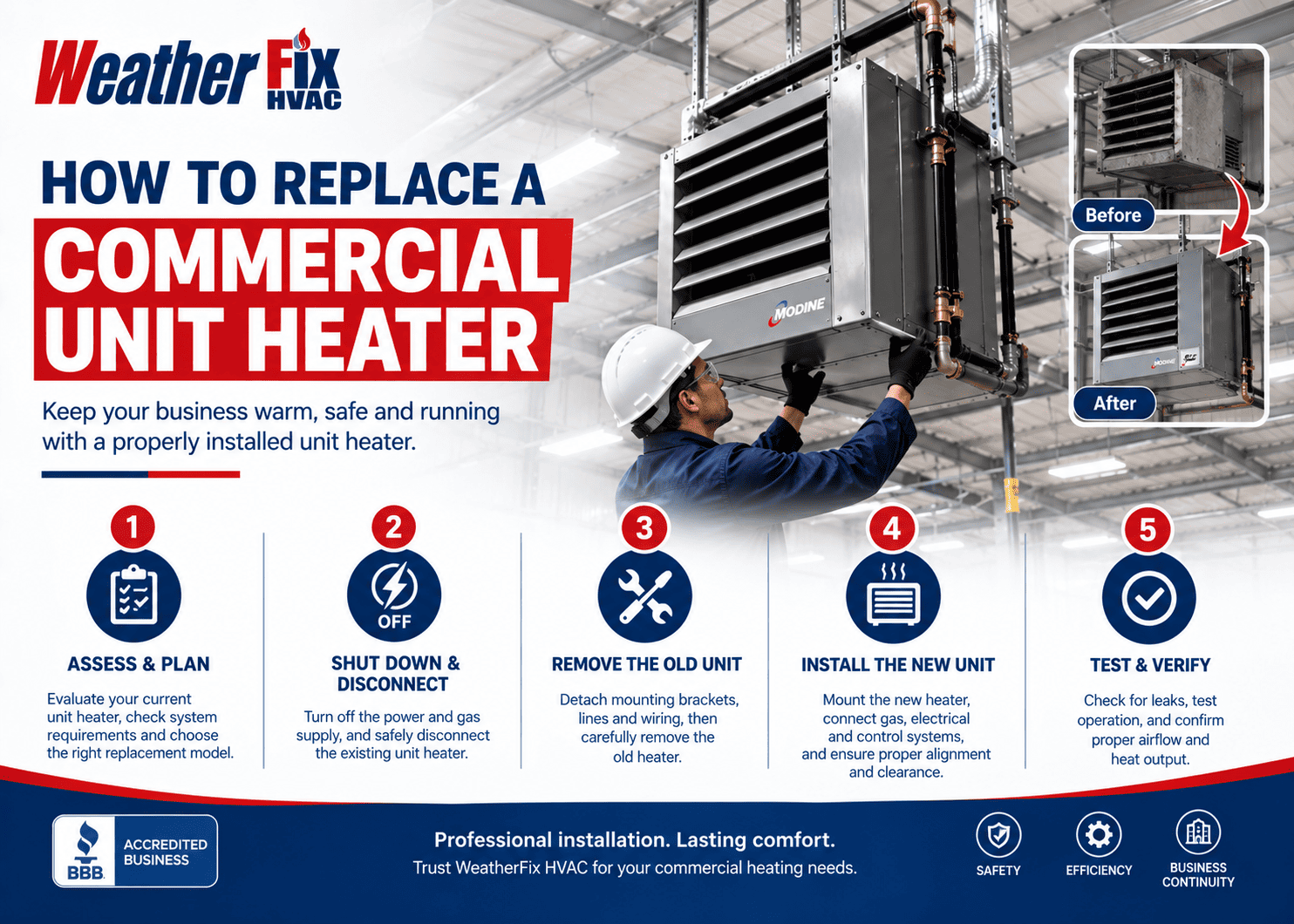
Replacing an aging unit heater is crucial for keeping your commercial garage or warehouse warm during Ottawa winters. Old heating equipment often suffers from cracked heat exchangers, inefficient burners, and unexpected breakdowns. Investing in professional heating services in Ottawa ensures your facility remains safe and operational during cold snaps.
When an old unit fails, learning how to replace a commercial unit heater helps you plan the replacement process effectively. Planning a new commercial unit heater installation restores shop comfort quickly. Modern units also lower your monthly energy expenses significantly.
Upgrading your heating infrastructure improves shop safety and protects valuable tools. Partnering with certified experts in commercial HVAC in Ottawa guarantees your replacement project complies strictly with local building codes.
Signs Your Commercial Unit Heater Needs Replacement
Commercial unit heaters operate under demanding conditions in busy warehouses and repair shops. Knowing when to repair versus when to replace your equipment saves time and money. Here are four clear signs that your heater has reached the end of its lifespan.
1. Cracked Heat Exchanger
A cracked heat exchanger is a severe safety hazard. It can leak dangerous carbon monoxide into your commercial workspace. If an inspection reveals cracking, immediate replacement is mandatory.
2. Frequent and Costly Repairs
Are you calling HVAC technicians repeatedly every winter? Ongoing repair bills quickly exceed the cost of buying a new unit. Replacing old equipment eliminates recurring downtime.
3. Rising Energy Bills
Aging unit heaters lose thermal efficiency over time. They burn more natural gas or consume more electricity to produce heat. Installing a modern high-efficiency unit reduces monthly operational costs.
4. Strange Noises or Weak Airflow
Squealing belts, banging motors, or weak airflow indicate severe component wear. When major mechanical components fail, replacing the entire unit is usually most economical.
Crucial Safety Warnings Before You Begin
Commercial heating replacement involves high-voltage electricity, natural gas piping, heavy overhead lifting, and exhaust venting systems. Gas-fired appliances in Ontario must comply with TSSA (Technical Standards and Safety Authority) regulations. Only certified gas technicians should perform gas pipe modifications and final connections.
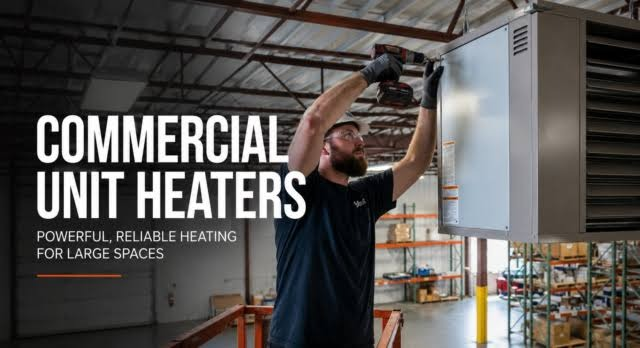
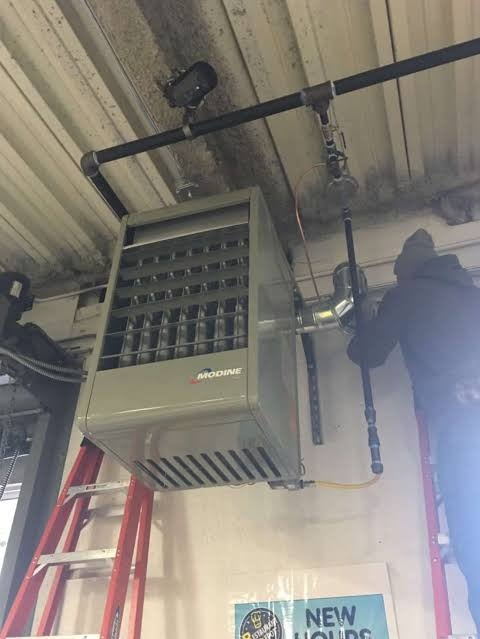
Licensed technician inspecting a commercial unit heater replacement. Image Source: Burlington Heating
Always shut off gas valves and electrical breakers before starting any work. Work safely using certified scissor lifts or heavy-duty ladders when working at ceiling height.
Step-by-Step Process: How to Replace a Commercial Unit Heater
Replacing a suspended unit heater requires careful preparation, proper tools, and systematic execution. Follow these detailed steps to complete a safe commercial replacement project.
Step 1: Turn Off Gas Supply and Main Power
Locate the gas shutoff valve leading to the existing heater. Turn the valve to the off position completely. Next, turn off the electrical breaker supplying power to the unit. Use a voltage tester to verify power is completely off before touching wires.
Step 2: Disconnect Electrical Wiring and Thermostat
Remove the electrical access panel on the old unit heater. Disconnect the line voltage power wires carefully. Label each wire clearly to simplify connecting the new unit later. Disconnect low-voltage thermostat wiring from the terminal strip.
Step 3: Disconnect the Gas Line and Exhaust Venting
Use two pipe wrenches to disconnect the gas union fitting safely. Cap the incoming gas line to prevent debris from entering. Unfasten the metal exhaust flue pipe from the heater vent collar. Inspect the existing vent pipe for rust or corrosion.
Step 4: Safely Lower and Remove the Old Unit
Commercial unit heaters are heavy and mounted high near ceiling joists. Use a hydraulic material lift to support the unit weight. Unbolt the suspension rods or mounting brackets carefully. Lower the old unit heater safely to the floor.
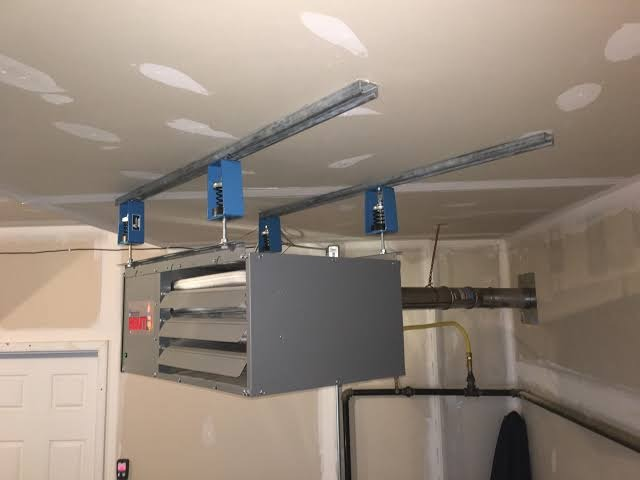
Proper overhead ceiling suspension mounting for a commercial unit heater. Source: Reddit
Step 5: Mount and Secure the New Unit Heater
Inspect the existing ceiling joists or steel roof trusses. Ensure structural support beams can handle the new unit weight. Raise the new unit heater using your material lift. Secure the heater firmly using threaded steel rods and vibration isolators.
Step 6: Connect Venting, Gas Piping, and Wiring
Attach the exhaust vent pipe to the new flue collar. Ensure all vent joints seal tightly to prevent carbon monoxide leaks. Reconnect the gas line using fresh pipe sealant on threaded joints. Reconnect electrical power and thermostat wiring according to the manufacturer diagram.
Step 7: Conduct Safety Checks and System Testing
Test all gas connections for leaks using soap bubble solution. Never use an open flame to test for gas leaks. Turn on electrical power and restore the gas supply valve. Set the thermostat high to test ignition, flame quality, and blower fan operation.
Commercial Unit Heater Replacement Checklist
Use this quick checklist to ensure every phase of your replacement project goes smoothly.
| Replacement Phase | Key Action Required | Completed? |
| Pre-Installation | Calculate building heat load and BTU needs | [ ] |
| Safety Preparation | Shut off gas valve and lock out electrical power | [ ] |
| Removal | Support unit with lift before unbolting | [ ] |
| Mounting | Verify ceiling truss structural weight capacity | [ ] |
| Connections | Seal exhaust flue joints and gas pipe threads | [ ] |
| Final Testing | Perform soap bubble leak test and check ignition | [ ] |
Sizing Considerations When Replacing Your Unit Heater
Do not assume your new heater should match the exact BTU rating of your old unit. Buildings change over time due to added insulation, new overhead doors, or altered floor layouts.
Calculating the correct heating load requires measuring total cubic air volume (Length×Width×Height). Installing an undersized heater causes continuous running and excessive wear. An oversized unit causes rapid short-cycling and uneven temperature distribution.
Read our guide on what size commercial unit heater do I need to calculate exact heating requirements. You can also explore how to choose a commercial unit heater to select between standard and separated combustion models.
Professional Installation vs. DIY Replacement
Many facility managers ask if they can replace a commercial unit heater themselves. While handy staff can assist with basic tasks, commercial heating replacement requires licensed expertise.
Gas line and venting connections require certified HVAC installation. Source: Chicago Commercial Refrigeration and HVAC
TSSA Code Compliance in Ontario
In Ontario, connecting gas appliances requires a licensed G2 or G1 gas technician. Unlicensed gas work violates provincial safety codes and invalidates commercial insurance policies.
Warranty Protection
Most commercial HVAC manufacturers require professional installation to validate equipment warranties. Self-installation often voids manufacturer warranties on heat exchangers and motors.
Structural and Electrical Safety
Commercial unit heaters weigh between 50 and 200 pounds. Suspending heavy equipment overhead requires structural calculations to prevent roof collapse hazards. Professional installers ensure complete structural and electrical safety.
Frequently Asked Questions About Replacing Commercial Unit Heaters
How long does it take to replace a commercial unit heater?
A straightforward commercial unit heater replacement typically takes four to eight hours. Complex jobs requiring new gas lines or roof venting may take longer.
How much does it cost to replace a commercial unit heater in Ottawa?
Total replacement costs depend on unit size, fuel type, and installation complexity. Most commercial replacements range between $2,500 and $6,000 including equipment and professional labor.
Can I replace a gas unit heater with an electric unit heater?
Yes, you can switch from gas to electric heating. However, electric units require high-voltage wiring and sufficient electrical panel capacity.
What is the average lifespan of a commercial unit heater?
Well-maintained commercial unit heaters last between 15 and 20 years. Regular annual maintenance extends equipment lifespan significantly.
Trust WeatherFix HVAC for Professional Commercial Replacement
Learning how to replace a commercial unit heater highlights the technical skill required for a safe installation. Protect your business, employees, and building investment by choosing licensed commercial HVAC specialists.
At WeatherFix HVAC, our TSSA-certified technicians deliver complete turn-key replacement services. We handle heat loss calculations, equipment removal, overhead rigging, gas piping, and safety testing. We serve commercial facilities across Ottawa, Nepean, Kanata, Barrhaven, Orleans, and Gloucester.
Contact WeatherFix HVAC today for a fast commercial replacement quote:
- Phone: 613-720-4567
- Email: Service@WeatherFix.ca
- Address: 1442 Forest Valley Dr, Ottawa, ON K1C 5N1
- Website: www.weatherfix.ca
Would you like me to generate title tags, meta descriptions, or promotional posts for this article?