
When winter arrives in Eastern Ontario, keeping your commercial facility warm is essential for daily business operations. Sub-zero temperatures, freezing drafts from loading dock doors, and high ceilings can quickly turn a warehouse, auto repair shop, or distribution center into an icebox. Knowing how to choose a commercial unit heater ensures your workspace stays comfortable, your inventory remains protected, and your monthly energy bills stay under control.
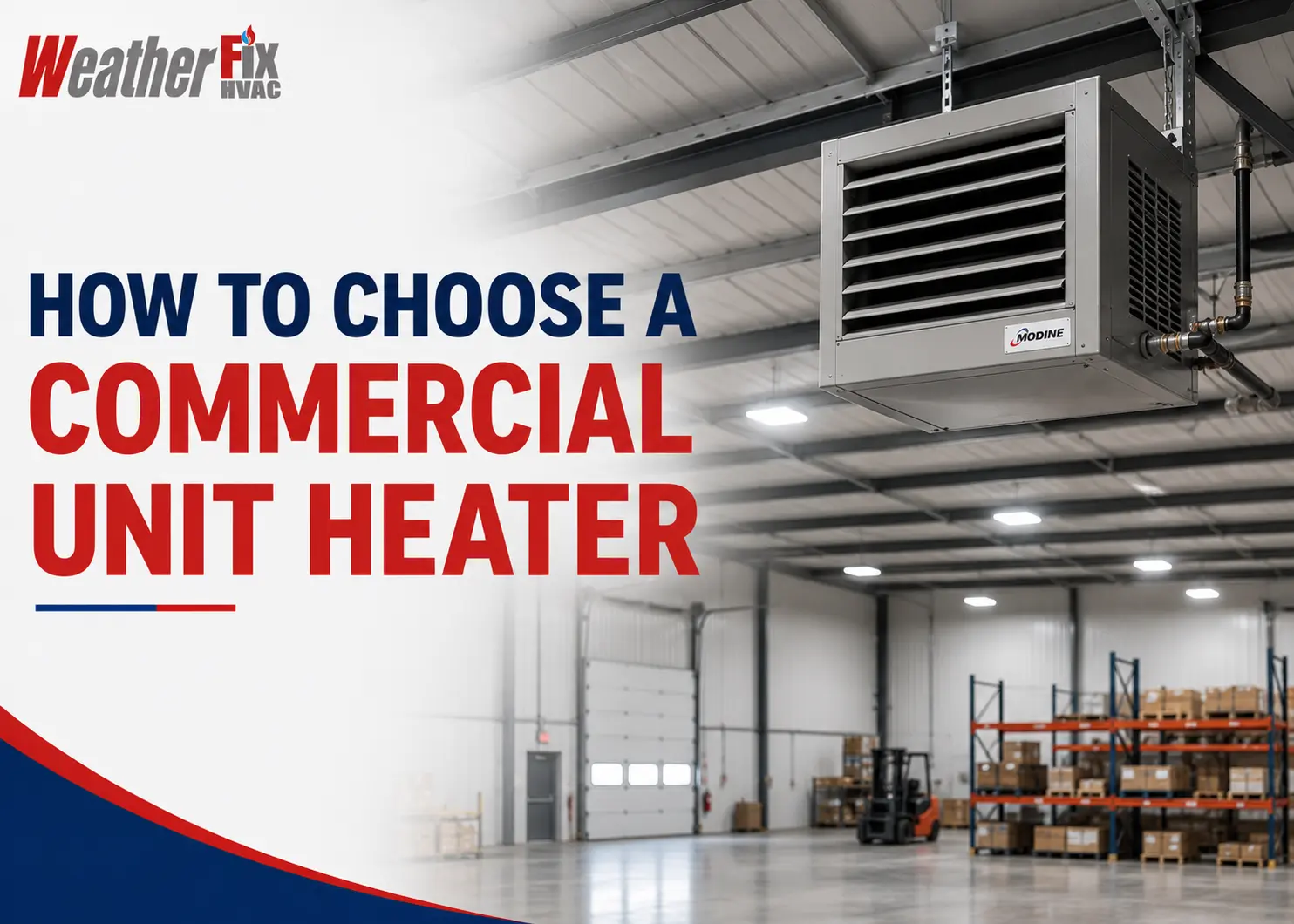
Commercial unit heaters are suspended heating systems designed to deliver powerful, directed warmth to large, open spaces without consuming valuable floor real estate. However, selecting the wrong size or fuel type can lead to high operating costs, inadequate heating, and premature equipment failure. In this comprehensive guide, the experts at WeatherFix break down the critical factors every local business owner and facility manager must evaluate before purchasing a new heating unit.
Why Understanding How to Choose a Commercial Unit Heater Matters
Commercial properties have vastly different heating dynamics than standard residential homes. Large bay doors opening frequently, uninsulated concrete slabs, and 20-foot ceilings create immense thermal demands. Learning how to choose a commercial unit heater correctly provides several major benefits for your facility:
- Lower Operating Costs: An appropriately sized, high-efficiency unit prevents wasted energy and keeps gas or electric utility bills manageable throughout long Ottawa winters.
- Consistent Temperature Control: Properly selected air throw and fan configurations eliminate freezing draft zones around workstations and loading docks.
- Maximizing Usable Floor Space: Because unit heaters mount to ceiling joists or wall brackets, they free up valuable floor area for machinery, pallet racking, and vehicles.
- Enhanced Durability and Safety: Industrial-grade components withstand dusty, demanding environments while meeting strict Canadian safety standards and Ontario building codes.
Step 1: Select the Right Fuel Type for Your Facility
The first major decision is determining the energy source that best aligns with your building’s infrastructure and operating budget.
Commercial Unit Heater Fuel Comparison
| Fuel Type | Best Applications | Key Advantages |
| Natural Gas | Warehouses, Garages, Showrooms | High BTU output, cost-effective run time |
| Propane (LP) | Rural or Off-Grid Facilities | Powerful heat where gas lines don’t reach |
| Electric | Clean Rooms, Small Workshops | No venting needed, zero emissions |
| Hydronic (Hot Water) | Buildings with Existing Boilers | Safe in combustible/dusty environments |
1. Gas-Fired Unit Heaters (Natural Gas & Propane)
Gas-fired models are the most popular heating solution for commercial properties across Ottawa, Kanata, and Nepean. They offer rapid warm-up times and high BTU outputs capable of heating massive cubic volumes.
- Natural Gas: Highly economical for facilities connected to municipal utility lines.
- Propane: An excellent alternative for commercial buildings in rural surrounding areas like Carp or Osgoode where natural gas mains are unavailable.
2. Electric Unit Heaters
Electric unit heaters are simple to install because they do not require exhaust venting, chimney flues, or gas piping. They operate cleanly and quietly. Electric units are ideal for smaller workshops, mezzanine offices, or isolated storage rooms. However, because electricity rates are higher per BTU than natural gas, electric units are generally better suited for smaller spaces or intermittent heating rather than continuous heating in massive warehouses.
3. Hydronic (Hot Water or Steam) Unit Heaters
If your facility utilizes a central boiler loop, hydronic unit heaters connect directly to your hot water or steam lines. These units use a hot water coil and an electric fan to circulate warmth. Because there is no open flame or internal combustion, hydronic heaters are one of the safest options for environments with combustible dust, paint booths, or chemical storage.
Step 2: Calculate the Required Heating Capacity (BTUs)
Choosing the correct capacity is the most technical part of learning how to choose a commercial unit heater. Commercial heating power is measured in British Thermal Units (BTUs) per hour.
An undersized unit will run constantly without ever reaching the set temperature on cold January mornings. An oversized heater will short-cycle, causing rapid temperature swings, noisy startups, and accelerated wear on the heat exchanger.
Critical Factors for Sizing:
- Total Cubic Volume: Sizing a warehouse is about cubic footage ($Length \times Width \times Height$), not just square footage. High ceilings trap rising heat, requiring higher airflow velocity and output.
- Building Insulation (R-Value): Metal pole barns and uninsulated masonry structures lose heat much faster than modern, insulated tilt-up concrete buildings.
- Infiltration and Bay Doors: If overhead shipping doors open and close multiple times per hour, you must account for massive cold air infiltration during peak business hours.
- Local Temperature Differential ($\Delta T$): In Ottawa, winter design temperatures frequently drop below -25°C. The heating system must easily bridge the gap between outdoor extremes and your desired indoor target (e.g., 18°C for active work areas or 10°C for freeze protection).
Professional load calculations evaluate these variables mathematically. If your building’s demands are complex, pairing unit heaters with broader commercial HVAC in Ottawa design ensures all zones maintain thermal balance.
Step 3: Choose Between Propeller Fans and Centrifugal Blowers
Commercial unit heaters rely on internal fans to project warm air across your facility. You will generally choose between two air delivery designs:
Propeller (Axial) Fan Models
- Best for: Open spaces, workshops, retail garages, and standard warehouses.
- Characteristics: The fan sits exposed on the back of the unit, pushing large volumes of air directly into the room. They are cost-effective, energy-efficient, and easy to service.
- Air Throw: Equipped with adjustable horizontal louvers to direct warmth toward floor level where employees work.
Centrifugal Blower Models
- Best for: Ducted applications, long narrow corridors, or environments requiring air filters.
- Characteristics: Blowers generate higher static pressure, allowing the unit to push heated air through ductwork or past high-efficiency filtration systems. They operate at lower noise levels, making them suitable for commercial showrooms or customer-facing areas.
Step 4: Select the Venting Configuration
For gas-fired unit heaters, selecting the appropriate venting strategy is crucial for both energy efficiency and building safety.
Commercial Unit Heater Venting Types
| Vent Type | Combustion Air Source | Best Facility Environment |
| Gravity / Standard | Drawn from inside the room | Clean, well-ventilated general spaces |
| Power Vented | Drawn from room, fan-assisted | Buildings venting through side walls |
| Separated Combustion | Drawn directly from outdoors | Dusty, woodworking, or chemical shops |
Separated Combustion (Direct Vent)
In environments such as woodworking shops, auto body repair garages, or welding bays, the indoor air contains sawdust, paint fumes, and airborne particulates. Standard heaters pull this contaminated air across open burners, creating fire hazards and corroding heat exchangers.
Separated combustion units draw 100% of their combustion air directly from the outdoors through dedicated piping and vent exhaust gases back outside. This completely isolates the flame from indoor contaminants, ensuring safety and extending the heater’s lifespan.
Step 5: Evaluate Thermal Efficiency and ROI
Modern unit heaters fall into two main efficiency categories:
- Standard Efficiency (80%–83% Thermal Efficiency): These non-condensing units vent warm exhaust through metal chimneys. They carry a lower initial purchase price and are well-suited for spaces that only require occasional or supplementary heating.
- High-Efficiency Condensing (90%–97% Thermal Efficiency): Condensing unit heaters extract latent heat from exhaust gases before venting them out through PVC or polypropylene piping. While the initial investment is higher, they use significantly less fuel. For large facilities in Gloucester, Barrhaven, or Kanata running heat 24/7, high-efficiency models yield substantial utility savings over their operating lifespan.
Step 6: Plan for Installation Codes and Ongoing Maintenance
Installing suspended commercial equipment requires specialized rigging, gas fitting, and electrical connections. In Ontario, all gas-fired commercial appliances must be installed in compliance with TSSA (Technical Standards and Safety Authority) regulations by certified technicians.
Key installation details include:
- Mounting Height Clearances: Installing a unit too high can trap heat near the ceiling, while mounting it too low can create clearance hazards for forklifts and vehicle lifts.
- Clearance to Combustibles: Maintaining manufacturer-specified distances from walls, wood framing, and stored inventory is mandatory for fire safety.
- Thermostat & Control Strategy: Installing commercial programmable thermostats, destratification ceiling fans, or central building automation connections prevents overheating unoccupied spaces over weekends.
Once your system is installed, staying on top of how often HVAC systems should be serviced protects your capital investment. Annual pre-winter inspections catch dirty burner assemblies, failing exhaust blowers, and loose electrical connections before they cause mid-winter business disruptions.
Commercial Unit Heater Selection Checklist
- Determine primary fuel availability (Natural Gas, Propane, Electric, Hydronic)
- Calculate total cubic volume and heat loss factors (Manual N / Commercial Load)
- Assess indoor air quality (Standard Vent vs. Separated Combustion for dusty/fume areas)
- Choose fan type (Propeller for open areas vs. Blower for ducted setups)
- Verify ceiling height and forklift clearance paths
- Select efficiency tier based on annual operating hours and fuel ROI
- Hire a licensed, TSSA-certified commercial HVAC contractor
Upgrade Your Commercial Heating with WeatherFix
Choosing the right heating equipment for your commercial property does not have to be complicated. Whether you are outfitting a new warehouse expansion in Orleans, replacing an aging garage heater in Stittsville, or optimizing an industrial facility in Kanata, WeatherFix delivers tailored, reliable climate control solutions.
Our certified technicians handle the entire process—from initial heat loss calculations and equipment selection to seamless installation and ongoing preventative maintenance. We ensure your facility stays warm, compliant, and energy-efficient all winter long.
Ready to find the perfect commercial unit heater for your property? Contact WeatherFix