
Choosing between a gas vs electric commercial unit heater is a critical decision for Ottawa business owners. Freezing winters demand reliable, efficient, and heavy-duty heating for commercial workshops and warehouses. Investing in professional commercial HVAC in Ottawa keeps your facility warm and operational during extreme cold snaps.
Selecting the right system impacts your monthly utility bills and shop floor comfort. Proper heating services in Ottawa ensure your heating equipment operates at peak efficiency all winter long. Planning a new commercial unit heater installation requires evaluating your building’s power supply and gas availability.
This guide compares gas and electric models to help you make an informed decision.
Gas vs Electric Commercial Unit Heater: Key Differences Explained
Understanding the fundamental differences between gas and electric heaters is essential before purchasing. Both system types deliver dependable overhead heat, but their fuel sources, efficiency ratings, and installation needs vary greatly. Here is how each commercial heating technology operates inside your Ottawa building.
How Gas Commercial Unit Heaters Work
Gas unit heaters burn natural gas or liquid propane to generate heat. A high-output burner heats an internal heat exchanger. A powerful propeller fan pushes warm air across your shop floor. These units require venting pipes to exhaust combustion gases safely outdoors. They deliver massive heating capacity and rapid thermal recovery after doors open.
How Electric Commercial Unit Heaters Work
Electric unit heaters use heavy-duty electric resistance coils to generate thermal energy. An internal blower fan draws in cold air and forces it past heated elements. These systems require no gas lines, flues, or exhaust vents. They offer clean, quiet, and reliable heat with minimal moving parts. Electric models are ideal for spaces without existing natural gas connections.
Direct Comparison: Gas vs Electric Commercial Unit Heaters
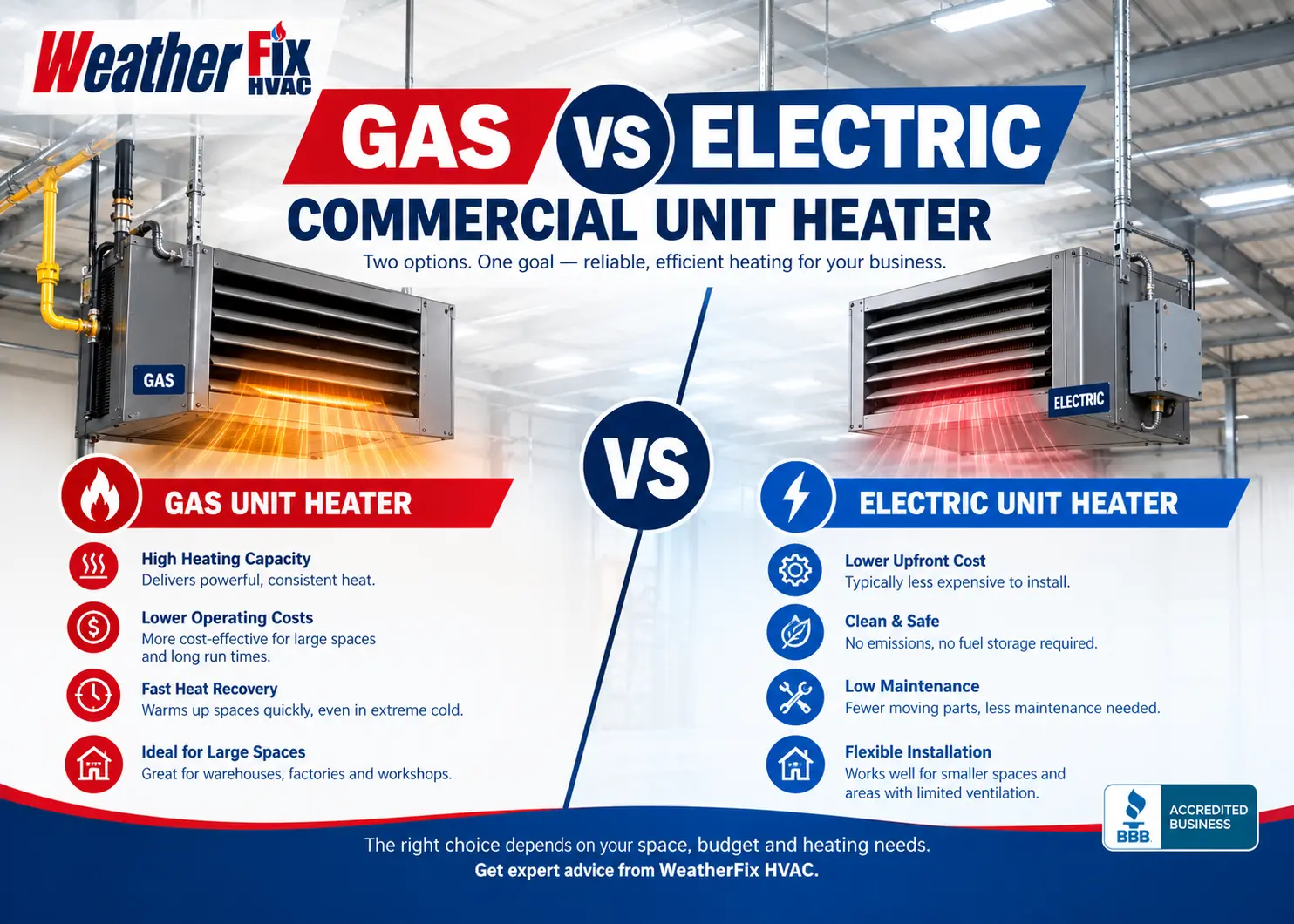
| Feature | Gas Commercial Unit Heater | Electric Commercial Unit Heater |
| Upfront Unit Cost | Moderate to High | Low to Moderate |
| Installation Cost | Higher (Venting & Gas Line) | Lower (Electrical Only) |
| Monthly Operating Cost | Significantly Lower in Ontario | Higher Due to Electricity Rates |
| Heating Capacity (BTUs) | High to Very High (up to 400k+ BTU) | Low to Medium (up to 100k BTU) |
| Exhaust Venting Needed? | Yes (Flue Pipe Required) | No Venting Required |
| Maintenance Needs | Annual Gas & Burner Inspection | Minimal Routine Cleaning |
| Best Commercial Use | Auto Shops, Large Warehouses | Small Bays, Clean Storage Rooms |
Key Factors to Consider When Choosing Your Commercial Heater
Operating Costs and Energy Rates in Ontario
Fuel costs represent your largest long-term expense when heating a commercial garage. In Ontario, natural gas is significantly cheaper per BTU than electricity. Large facilities heating space continuously will save thousands annually using natural gas. Electric units cost more to operate during peak winter demand periods.
Installation Requirements and Infrastructure
Gas heaters require dedicated gas supply lines and proper chimney venting through exterior walls. These venting requirements increase initial installation complexity and labor costs. Electric heaters avoid venting entirely, making installation faster and simpler. However, electric models may require expensive electrical panel upgrades for high wattage.
Heating Capacity and Shop Size
Shop volume determines total heat load requirements for your commercial building. If you have high ceilings and frequent overhead door openings, choose gas. Gas units recover lost heat rapidly after cold air enters your service bays. Electric units suit smaller spaces, isolated offices, or secondary storage areas best.
Maintenance and System Longevity
Gas-fired unit heaters contain burners, gas valves, and heat exchangers that need annual maintenance. Regular inspection prevents heat exchanger cracks and ensures safe fuel combustion. Electric heaters have fewer mechanical components, reducing routine servicing needs. Both systems last many years when installed by certified HVAC professionals.
Frequently Asked Questions About Commercial Unit Heaters
Which option is cheaper to run in Ottawa, gas or electric?
Natural gas is significantly cheaper to operate for continuous commercial heating in Ottawa. Electricity prices per kilowatt-hour make electric heaters more expensive for large spaces.
Do electric commercial unit heaters require exhaust venting?
No, electric unit heaters do not produce any combustion gases or carbon monoxide. They do not require chimneys, flue pipes, or exterior wall penetrations.
Can I replace my electric unit heater with a gas unit heater?
Yes, you can upgrade from electric to gas commercial heating. You will need an active gas line and proper exhaust venting installed. Learn more about system sizing in our guide what size commercial unit heater do I need.
What type of heater is safest for dusty workshops or paint bays?
Separated combustion gas heaters or electric heaters are ideal for dusty environments. Separated combustion gas units pull combustion air directly from outdoors through sealed pipes. Explore our complete guide on how to choose a commercial unit heater for safety tips.
Upgrade Your Commercial Heating with WeatherFix HVAC
Choosing between a gas vs electric commercial unit heater requires expert facility analysis. Don’t let freezing Ottawa winters disrupt your operations or inflate utility costs. At WeatherFix HVAC, our TSSA-certified technicians deliver reliable commercial heating solutions.
We provide complete heat loss calculations and turn-key installation services across Ottawa. We serve businesses in Nepean, Kanata, Barrhaven, Orleans, and Gloucester. Contact our team today to schedule your commercial heating consultation.