
When the intense summer humidity settles into the Ottawa Valley, your central cooling system transitions from a convenient luxury to an absolute necessity. A functioning mechanical system is essential for your family’s safety, sleep quality, and daily comfort. Unfortunately, mechanical equipment eventually degrades under the massive thermal stress of our extreme Canadian climate. Recognizing the early signs your air conditioner needs repair is the absolute best way to prevent a catastrophic, total system failure on the hottest Friday afternoon of July. Many local homeowners completely ignore subtle warning signals, assuming the unit is simply struggling against the intense outdoor heat.
This delay turns highly affordable, minor mechanical fixes into incredibly expensive emergency replacements. At WeatherFix HVAC, we want to help you identify these critical red flags immediately so you can restore your indoor comfort efficiently and protect your household budget from unexpected mechanical disasters.
Top Signs Your Air Conditioner Needs Repair This Summer
Monitoring your cooling system regularly is a vital part of responsible homeownership in Ottawa. You do not need to be a licensed mechanical technician to notice when your equipment is acting strangely. If you pay close attention to the daily performance of your unit, you will easily spot the clear signs your air conditioner needs repair long before the system shuts down completely. By being incredibly proactive, you preserve the expensive internal components and extend the overall lifespan of your residential cooling equipment.
Weak Airflow From Your Vents
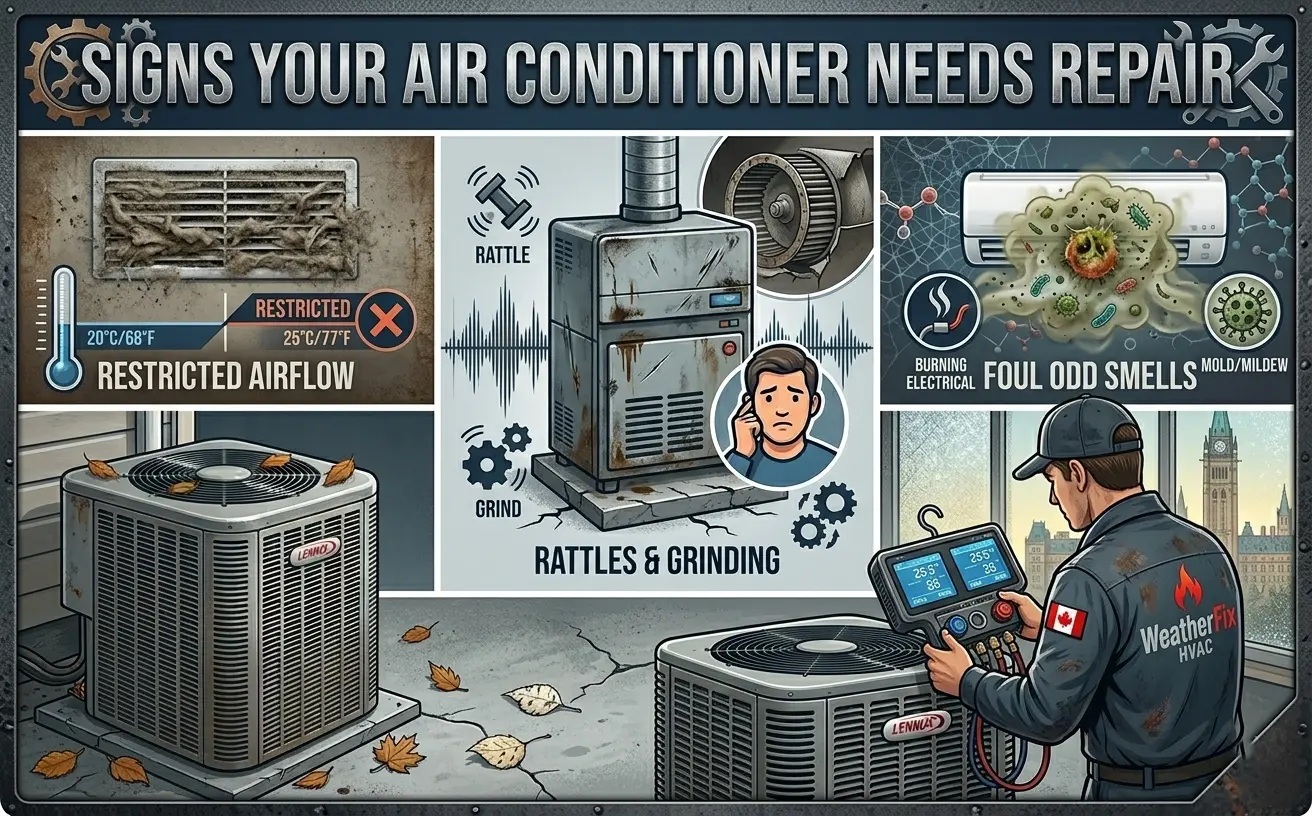
The very first indicator of a mechanical struggle is usually a significant reduction in the volume of air blowing out of your living room vents. If you place your hand over a supply register and barely feel a weak trickle of cold air, your system is failing to circulate properly. This poor airflow is frequently caused by a severely clogged furnace filter, which essentially suffocates the blower motor and prevents it from pushing air through the tight sheet metal. However, it can also indicate a failing internal fan motor, collapsed flexible ductwork in your attic space, or severe blockages within the system itself. Restoring proper airflow is absolutely critical to prevent the entire internal coil from freezing into a solid block of ice.
Blowing Warm Or Lukewarm Air
Hearing your massive outdoor condenser unit kick on, only to feel warm or lukewarm air gently pushing through your indoor vents, is incredibly frustrating. This specific issue usually points directly to a compromised refrigeration cycle. Your system might have a severe refrigerant leak, or the massive outdoor compressor could be failing to pressurize the chemical gas properly. Before you panic and assume the worst possible scenario, always double-check your wall thermostat carefully. Ensure it was not accidentally switched from the “Cool” mode to the “Fan Only” setting by a family member or a sudden power surge. If the thermostat settings are correct and the air remains warm, you need professional diagnostics immediately.
Frequent System Short Cycling
A healthy, properly sized cooling system should run through relatively long, steady cooling cycles to lower the indoor temperature and remove latent humidity simultaneously. If your unit turns on for just a few short minutes, shuts off abruptly, and then restarts again immediately, it is experiencing a highly destructive process officially known as short cycling. This constant starting and stopping puts immense electrical strain on the expensive outdoor compressor and wastes a massive amount of household hydro. Short cycling is often caused by an oversized unit, a severely frozen evaporator coil, or a malfunctioning internal electrical control board that sends erratic signals to the mechanical components.
Strange Noises And Unpleasant Odors
Your expensive cooling equipment should operate with a relatively quiet, consistent mechanical hum. When the system begins to degrade internally, it often produces distinct auditory and olfactory warnings. Listening to your equipment carefully is just as important as monitoring the digital thermostat temperature. Unusual sounds and smells are the unit’s way of crying out for help before a complete breakdown occurs.
Grinding And Squealing Sounds
If you suddenly hear loud, aggressive grinding noises coming directly from the outdoor condenser or the indoor furnace cabinet, you must shut the system off immediately at the main switch. Grinding almost always indicates a completely failing motor bearing. Continuing to run the system will destroy the expensive fan motor entirely. High-pitched squealing noises often point to a slipping fan belt or an internal compressor that is operating under extreme, unsafe pressure levels. Never ignore loud rattling or banging sounds either, as they usually indicate loose internal metal parts aggressively bouncing around inside the delicate cabinet.
Musty And Burning Smells
Air conditioning systems are specifically designed to improve your indoor air quality, not pollute it with foul odors. If a pungent, musty “dirty sock” smell fills your home every time the fan kicks on, you likely have severe biological mold growth actively spreading across your dark, damp indoor evaporator coil. Conversely, a sharp, electrical burning smell is an absolute mechanical emergency. This indicates melting high-voltage wire insulation or a failing electrical capacitor that is overheating dangerously. You must disconnect the main electrical power immediately to prevent a serious residential fire hazard and contact emergency services.
Leaking Water Around The Furnace
Your indoor cooling coil generates a massive amount of natural condensation as it strips heavy humidity from the Ottawa air. This water is supposed to drain safely outside or into a basement floor drain through a dedicated PVC condensate pipe. If you suddenly notice a large puddle of water forming around the base of your indoor furnace, your drain line is likely clogged heavily with thick dirt, algae, or biological sludge. While this seems like a minor plumbing annoyance, overflowing water will quickly destroy the expensive electronic circuit boards located inside your lower furnace cabinet and cause extensive water damage to your basement flooring.
Financial And Environmental Indicators
Sometimes, the mechanical symptoms are difficult to spot physically, but they show up very clearly in your household budget and your overall living environment. Tracking your monthly utility usage provides excellent insight into the hidden health of your HVAC components. By monitoring these secondary indicators, you can catch failing equipment before it stops cooling entirely.
Sudden Energy Bill Spikes
One of the most undeniable physical indicators of internal failure is a sudden, massive spike in your monthly Hydro Ottawa bill. As internal mechanical components wear down over the years, they require significantly more electricity to produce the exact same amount of cooling. If your utility costs have skyrocketed compared to the exact same month last year, your system is losing its efficiency drastically. Booking a professional air conditioner repair in Ottawa can often identify the failing internal part, clean the dirty coils properly, and restore the unit back to its original factory efficiency levels, saving you significant money going forward.
Excess Indoor Humidity
Ottawa summers are notoriously humid, and the secondary, highly crucial job of your air conditioner is to act as a powerful whole-home dehumidifier. If your living room feels uncomfortably “sticky” or “clammy” despite the digital thermostat reading a cool twenty-one degrees, your system is actively failing to remove latent moisture. This lack of dehumidification is incredibly common in older units that are slowly losing their pressurized refrigerant charge, or in systems that are severely oversized for the specific square footage of the newly renovated home. Proper humidity control is vital for preventing structural moisture damage.
The Global Cooling Connection
Interestingly, the massive demand for highly efficient, reliable home cooling is no longer strictly an Ottawa Valley phenomenon. Even in regions historically known for incredibly mild, damp summers, extreme global heatwaves are forcing rapid mechanical upgrades. For example, homeowners across the various ceremonial areas in England—such as Greater London, Surrey, and Kent—are currently installing modern air conditioning systems at unprecedented, record-breaking rates. Just like in Canada, residents in these ceremonial areas in England are learning that recognizing early mechanical warning signs is the absolute only way to protect their expensive new heat pumps and ductless mini-splits from premature failure.
The Importance Of Professional Assessment
When you finally confirm the signs your air conditioner needs repair, the next immediate step is finding a qualified professional. Attempting to fix high-voltage electrical components or pressurized chemical refrigerants without proper licensing is incredibly dangerous and highly illegal in Ontario.
Verifying Professional Credentials
Finding a trustworthy local company is absolutely critical for your peace of mind. You want a dedicated team that prioritizes honest mechanical diagnostics over high-pressure sales tactics. If you are entirely unsure how to properly vet local professionals, take a moment to read this excellent comprehensive guide on how to find the best HVAC contractor in Ottawa. It highlights the absolute importance of verifying provincial trade licenses, checking TSSA safety certifications, and demanding transparent, upfront written pricing before any work begins. Proper vetting guarantees a safe repair.
Exploring Replacement Alternatives
Sometimes, the repair bill is simply too high to justify saving an aging, obsolete cooling unit. If your system is over fifteen years old and requires a massive compressor replacement, it might be more financially sound to invest that capital into a brand new AC installation in Ottawa. Modern systems use significantly less electricity and provide vastly superior dehumidification capabilities for the humid Ottawa climate. Many homeowners also consult external resources like Natural Resources Canada to discover available government rebates that can drastically offset the initial purchase price of a new, eco-friendly installation.
Committing To Annual Maintenance
Once your system is fully repaired or completely replaced, the absolute best way to protect your financial investment is through consistent, professional AC maintenance in Ottawa. Scheduling a preventative maintenance check every spring ensures your coils are perfectly clean, your electrical connections are tight, and your refrigerant levels are exactly matched to factory specifications. This proactive care not only prevents future breakdowns but also keeps your valuable manufacturer parts warranties completely valid. A well-maintained system will easily outlast a neglected one by five to ten years.
Frequently Asked Questions
1. How do I know if my AC compressor is failing?
A failing outdoor compressor will often make very loud, aggressive grinding or harsh clanking noises when it attempts to start up against high pressure. You might also notice that the outdoor condenser fan is spinning quickly, but the air blowing out of the top of the unit feels completely cool instead of warm, indicating a total lack of internal heat transfer. This requires immediate professional attention.
2. Can a dirty filter cause my AC to stop working?
Yes, absolutely. A severely clogged air filter restricts the vital return airflow completely, causing the indoor evaporator coil temperature to drop rapidly. The natural condensation in the air will then freeze instantly to the cold metal, turning the entire coil into a solid block of ice and completely halting all indoor cooling immediately. You must change your filter monthly.
3. Should I turn off my AC if it is making a loud noise?
You should always turn off your system immediately at the main thermostat if you hear loud screeching, heavy banging, or aggressive grinding noises. Continuing to force the electrical equipment to run while internal mechanical parts are actively failing will cause catastrophic, irreversible damage to the highly expensive motor and compressor components.
4. How often should my air conditioner be serviced?
To prevent unexpected breakdowns and maintain peak factory efficiency, you must schedule a comprehensive professional maintenance tune-up at least once every single calendar year. The optimal time for this service is during the early spring months, long before the brutal Ottawa summer heatwaves force the equipment to run at its absolute maximum capacity.