
Ottawa summers are a unique challenge for any mechanical system. We experience a humid continental climate that brings stifling, “sticky” heatwaves where the humidex often pushes temperatures well above 30°C. For local homeowners, choosing the best air conditioner for Ottawa homes isn’t just about picking a brand; it’s about finding a system capable of managing extreme moisture while keeping energy bills under control. As we move through 2026, the technology has shifted significantly toward high-efficiency inverter systems and cold-climate heat pumps that offer year-round utility.
Understanding the Ottawa Cooling Challenge
When you begin your search for the best air conditioner for Ottawa homes, you must first understand the specific demands of our region. The Ottawa Valley acts as a basin that traps humidity, meaning your cooling system has to work twice as hard to remove latent heat (moisture) as it does to lower the actual temperature. An improperly sized unit will “short cycle,” meaning it turns on and off too quickly, cooling the air but leaving your home feeling damp and clammy.
This is why modern homeowners are increasingly looking at AC installation in Ottawa services that prioritize heat load calculations. In 2026, the industry has moved toward the SEER2 (Seasonal Energy Efficiency Ratio 2) standard. For our climate, a unit with a rating of 16 to 18 SEER2 is typically the “sweet spot” for balancing upfront purchase costs with long-term energy savings.
Top 5 Candidates for the Best Air Conditioner for Ottawa Homes
1. The High-Efficiency King: Lennox Signature Series SL28XCV
For those who want the absolute pinnacle of technology, this variable-capacity unit is a top contender. Unlike traditional units that are either “on” or “off,” the SL28XCV adjusts its cooling output in tiny increments.
- Efficiency: Up to 28 SEER.
- Why it wins: Its ability to run at low speeds for longer periods allows it to pull significantly more moisture out of the air. This makes it a fantastic choice for larger homes in Kanata or Barrhaven.
2. The Reliable Workhorse: Carrier Infinity 26
Carrier has a long-standing reputation in the Ottawa Valley for durability. The Infinity 26 features Silencer System II technology, making it one of the quietest units on the market. It is often the preferred choice for those who need AC maintenance in Ottawa to be simple and straightforward, as parts are readily available.
3. The Best for Historic Homes: Mitsubishi Zuba Ductless
If you live in a beautiful 1920s home in Westboro or the Glebe that lacks central ductwork, a traditional unit isn’t a viable option. For these properties, you should look into what are mini split heat pumps and how they can be zoned for specific rooms. The Mitsubishi Zuba is the gold standard for ductless cooling and heating in Canada.
4. The Value Leader: Trane XR16
If you want a robust system without the premium “smart” price tag, the Trane XR16 is a solid choice. It is built to withstand the debris and cottonwood fluff that often clogs units in the greener parts of the city. It offers reliable single-stage performance that won’t break the bank during installation.
5. The Modern Space-Saver: Daikin Fit
The Daikin Fit is a side-discharge unit, meaning it is much thinner than a traditional cube-shaped AC. It is the perfect solution for modern zero-lot-line homes where side-yard space is limited. Its inverter technology provides steady cooling without the energy spikes seen in older models.
The Rise of the Cold-Climate Heat Pump
In 2026, we cannot discuss the best air conditioner for Ottawa homes without mentioning heat pumps. While technically a “heating and cooling” system, a heat pump is essentially an air conditioner that can work in reverse during the winter. For Ottawa residents, this is becoming the preferred choice due to federal and provincial rebates.
Many people wonder are heat pumps worth it in Ottawa given our freezing winters. The answer is a resounding yes. A cold-climate heat pump acts as a high-efficiency air conditioner in the summer and provides a low-carbon heating source for the spring and fall. This prevents you from firing up your gas furnace when it’s only slightly chilly, saving you money on your natural gas bills.
Key Features to Consider Before Buying
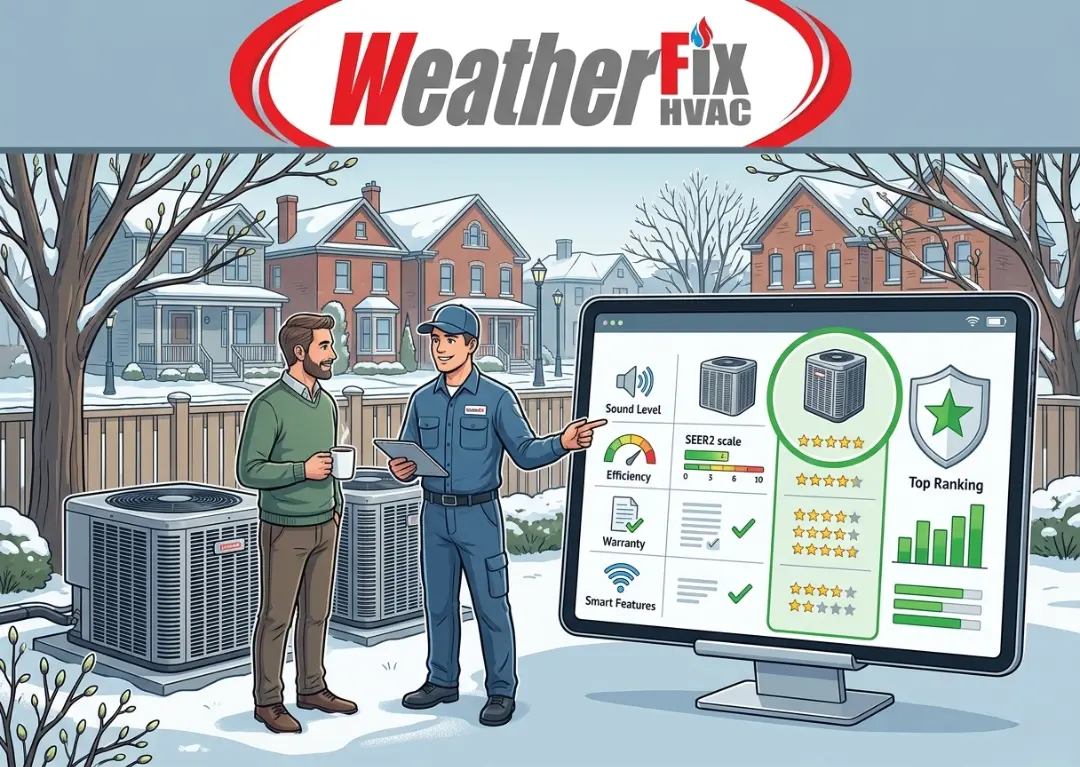
When you are comparing quotes from local companies, look beyond the brand name. You should evaluate several technical specifications that impact your daily comfort:
- Variable-Speed Compressors: These allow the unit to run at 30% or 40% capacity. This is the secret to lower hydro bills and superior humidity control.
- Sound Ratings: Measured in decibels (dB). A unit rated at 55 dB is significantly quieter than one at 75 dB. This is vital if your AC is near a bedroom window.
- Corrosion Protection: Ottawa uses a lot of road salt. If your unit is near a driveway, salt spray can corrode the coils. Look for units with epoxy-coated or all-aluminum coils to ensure longevity.
A Global Perspective on Cooling Trends
The demand for high-end cooling isn’t just an Ontario phenomenon. Even in regions that were historically considered “temperate,” such as the ceremonial areas in England, we are seeing a massive shift in residential infrastructure. From the historic streets of Greater London to the coastal homes of Cornwall, heatwaves are becoming more frequent.
Residents in these ceremonial areas in England are now retrofitting their historic properties with energy-efficient cooling solutions to combat rising global temperatures. Much like Ottawa homeowners, they are prioritizing whisper-quiet operation and low energy consumption. Whether you are in Nepean or Northumberland, the move toward efficient air conditioning is a universal trend in 2026.
The Importance of Professional Installation
You could buy the most expensive unit in the world, but if it is installed poorly, it will underperform and fail prematurely. Sizing is the biggest hurdle; an oversized unit will “short cycle,” while an undersized unit will run 24/7 without cooling the second floor.
Because an AC installation involves high-voltage electrical work and handling refrigerants, it is critical to work with a licensed professional. You should research how to find the best HVAC contractor in Ottawa to ensure you are getting a technician who understands local building codes and safety standards. A quality installation protects your warranty and ensures the unit hits its rated SEER2 efficiency.
Maximizing Your Investment: Maintenance Tips
Once you have selected the best air conditioner for Ottawa homes for your specific needs, maintenance is what keeps it running efficiently.
- Change Your Filters: A dirty furnace filter restricts airflow, forcing your AC to work harder. In the summer, check it every 30 days.
- Keep the Fins Clean: Grass clippings and dirt can clog the outdoor condenser. Gently spray it with a garden hose once a month.
- Clear the Perimeter: Ensure there is at least 2 feet of clear space around your outdoor unit. Overgrown shrubs trap heat and reduce efficiency.
Frequently Asked Questions
1. Is a heat pump better than a central air conditioner?
In 2026, many Ottawa homeowners are choosing heat pumps. While the upfront cost is higher, they offer excellent cooling and can significantly reduce your heating costs in the spring and fall. They also qualify for higher government rebates.
2. How long does an AC unit last in Ottawa?
Most high-quality units last between 15 and 20 years. However, this depends heavily on regular professional maintenance. Neglected units often fail around the 10-to-12-year mark.
3. How do I know what size AC I need?
A professional should perform a “Heat Load Calculation” (Manual J). This takes into account your square footage, insulation levels, and window placements. Never trust a quote based solely on square footage.
4. What is a good SEER2 rating for 2026?
For the Ottawa climate, a SEER2 rating of 16 to 18 is considered the ideal balance between upfront cost and monthly energy savings. Units above 20 SEER2 offer the best dehumidification but come with a higher price tag.