

In Ottawa, the architectural landscape is a mix of everything—from brand-new builds in Kanata to century-old brick homes in the Glebe. While the new homes often have modern ductwork, many older properties rely on boilers and radiators, leaving them without a way to install central air conditioning or forced-air heating. For decades, the only solution was noisy, inefficient window AC units and expensive baseboard heaters.
Enter the mini split. You may have seen them: sleek white units mounted high on the walls of homes, restaurants, or additions. But what are mini split heat pumps, exactly?
In short, they are the most versatile, efficient, and flexible heating and cooling solution available today. They allow you to control the temperature in individual rooms without the need for bulky ductwork. This guide will break down exactly how they work, why they are perfect for the Ottawa climate, and whether one is right for your home.
The Basics: What Are Mini Split Heat Pumps?
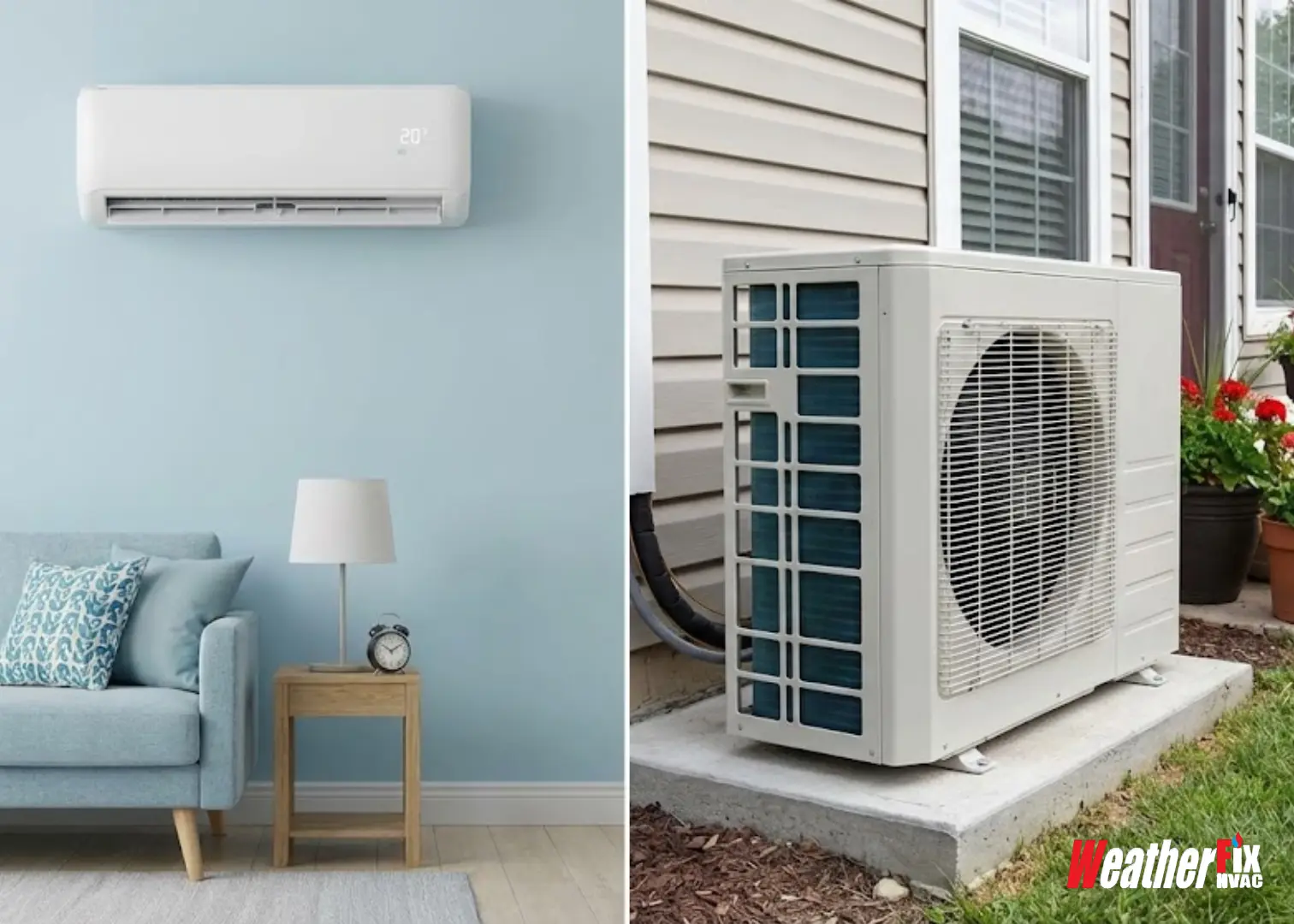
A mini split (often called a “ductless mini split”) is a type of heating and cooling system that doesn’t rely on ducts to move air. Instead, it is “split” into two main components:
- The Outdoor Unit (Condenser): This sits outside your home. It contains the compressor, which pumps refrigerant through the system.
- The Indoor Unit (Evaporator Head): This is mounted inside the room you want to condition. It contains a quiet fan and coil to cool or heat the air directly in that space.
Connecting these two parts is a small bundle of copper tubing and electrical wires (the “line set”) that runs through a 3-inch hole in your wall. Because there are no ducts, there is zero energy loss, making them incredibly efficient.
How Do They Work? (Heating and Cooling)
To understand what are mini split heat pumps, you have to understand the technology inside them. They are not just air conditioners; they are heat pumps. This means they can reverse their operation.
In the Summer (Cooling Mode)
The system acts like a high-efficiency air conditioner. The indoor unit absorbs heat and humidity from your room. The refrigerant carries this heat through the copper lines to the outdoor unit, which dumps it outside. The result is cool, dry air delivered quietly into your room.
In the Winter (Heating Mode)
This is where the magic happens. Even when it is -20°C or -25°C in Ottawa, there is still heat energy in the outdoor air. The mini split uses advanced inverter technology to extract this hidden heat, compress it (making it hotter), and pump it inside. It is essentially “moving” heat rather than creating it, which is why it uses a fraction of the energy of electric baseboards.
The 3 Key Benefits for Ottawa Homes
Why are these systems exploding in popularity across the National Capital Region?
1. No Ductwork? No Problem.
This is the biggest selling point. Many beautiful Ottawa homes built before 1960 use hot water radiators for heat. They have no ductwork. Installing ducts would require tearing down ceilings and building bulkheads, costing tens of thousands of dollars.
A mini split solves this instantly. You can install a “head” in the master bedroom, the living room, or a sunroom addition without major renovation. It is the perfect solution for older homes or for fixing that one room that is always too hot or too cold.
2. Zoned Comfort (End the Thermostat War)
With a central system, you have one thermostat for the whole house. If you want the bedroom cool, you have to cool the empty basement too.
With a mini split, you get “zoning.” Each indoor unit has its own remote control.
- You can keep the living room at 21°C.
- You can keep the bedroom at a cool 18°C for sleeping.
- You can turn off the unit in the guest room when nobody is there.
This precision control saves money and keeps everyone comfortable.
3. Efficiency That Saves Money
We all know electricity rates in Ontario are rising. Mini splits are the efficiency champions.
- SEER Ratings: A standard central AC might be 13 or 14 SEER. A high-end mini split can be 20 to 30 SEER. They sip electricity.
- HSPF Ratings: For heating, they are vastly cheaper to run than electric baseboards. Because they use inverter technology (variable speed compressors), they ramp up and down gently rather than blasting on and off, keeping your power bill steady.
Styles of Indoor Units: It’s Not Just a Wall Box
When asking what are mini split heat pumps, most people picture the white wall-mounted box. While that is the most common, you have options to fit your decor.
Wall-Mounted Units
The standard choice. They are mounted high on a wall, usually about 6 inches from the ceiling. They are the most affordable and easiest to install.
Floor-Mounted Units
These sit low on the wall, similar to a traditional radiator. They are excellent for attics with slanted ceilings or for homeowners who don’t want a unit high on the wall. They are also very effective for heating, as they deliver warm air at floor level.
Ceiling Cassettes
These are recessed into the ceiling, sitting flush with the drywall. All you see is a flat grille. They distribute air in four directions and are very popular in open-concept renovations where you want the unit to be invisible.
Is a Mini Split Right for You?
While they are amazing technology, they aren’t for every single situation. Here is a quick checklist.
You SHOULD consider a mini split if:
- You live in an older home with radiators or baseboard heat.
- You have a room that is always uncomfortable (a bonus room over a garage, a sunroom, or a finished attic).
- You are building a home addition and don’t want to upgrade your existing furnace to handle the extra load.
- You want to reduce your reliance on expensive oil or propane heating.
You might NOT need one if:
- You already have a fully ducted home with a modern, high-efficiency furnace and AC that works perfectly. In this case, a central heat pump (that looks like a traditional AC) might be a better swap.
Installation: What to Expect
Installing a mini split is faster than a central system, but it is not a DIY job. It requires handling high-pressure refrigerant and high-voltage electricity.
- Timeline: A professional team can usually install a single-head system in one day. A multi-head system (one outdoor unit connected to 3 or 4 indoor units) might take two days.
- The Process: The technician mounts the indoor unit, drills a small 3-inch hole through the wall, mounts the outdoor unit on a stand (vital for Ottawa snow!), runs the lines, and connects the power.
- The Snow Stand: Just like central heat pumps, the outdoor unit must be raised off the ground. If it sits in the snow, it cannot breathe, and it will fail in January.
You can read more about the installation process in our guide on AC condenser unit installation, as the outdoor setup is very similar.
Maintenance: The One Thing You Must Do
Mini splits are low maintenance, but they are not “no maintenance.” The most critical task for the homeowner is cleaning the filters.
Because the indoor unit is in the room with you, it pulls in dust and pet dander directly. The mesh filters inside the unit need to be washed every 4-6 weeks. If you ignore them, the unit will choke, and you’ll be asking how do you clean a heat pump sooner than you’d like.
Professional maintenance is also key. A technician should deep clean the blower wheel and check the refrigerant levels annually to ensure the system handles the Ottawa extremes.
Conclusion: The Future of Ottawa Comfort
So, what are mini split heat pumps? They are the solution to Ottawa’s most difficult heating and cooling challenges. They bring efficient, quiet, and customizable comfort to homes that never thought it was possible. Whether you want to cool a hot bedroom or heat an entire heritage home without ducts, the mini split is the technology of choice.
If you are ready to say goodbye to window shakers and baseboard heaters, our team is here to help. From expert heating services in Ottawa to finding the perfect ductless configuration for your home, Weatherfix has the expertise you need.
Frequently Asked Questions (FAQ)
1. Can a mini split really heat my house in an Ottawa winter?
Yes, absolutely. Modern “Cold Climate” mini splits are designed specifically for our weather. They can maintain 100% of their heating capacity down to -15°C and continue working efficiently down to -25°C or even -30°C. However, it is crucial to buy a model rated for cold climates (like Mitsubishi Hyper-Heat or similar), not a standard model designed for the southern US.
2. How many indoor heads can I have with one outdoor unit?
A single outdoor unit can typically support up to 5 indoor heads. This is called a “multi-zone” system. This allows you to heat and cool your bedrooms, living room, and kitchen all from one machine outside.
3. Are mini splits noisy?
They are incredibly quiet. The indoor units run at about 19-25 decibels, which is quieter than a whisper (literally quieter than a library). The outdoor units are also much quieter than traditional central ACs, making them neighbor-friendly in tight Ottawa subdivisions.
4. Do mini splits qualify for government rebates?
Yes. Because they are so energy efficient, cold-climate air source heat pumps often qualify for significant rebates under federal programs like the Greener Homes initiative (when active). It is always worth checking current rebate eligibility with your contractor before installing.