
Ottawa homeowners face brutal winters and rising energy costs every year. Many people wonder, can a heat pump replace a furnace entirely? Modern heating technology has advanced significantly. This guide explores if switching completely is the right choice for your home.
Can a Heat Pump Replace a Furnace
The simple answer is yes. Modern cold climate heat pumps are incredibly powerful. They can handle freezing temperatures with ease. However, the decision requires careful planning. You must consider your home insulation and layout. An older home might need supplemental heating during extreme cold. A well-insulated new build can often rely entirely on electric heating. We will explore exactly how this transition works in Canada.
Understanding The Heating Technology
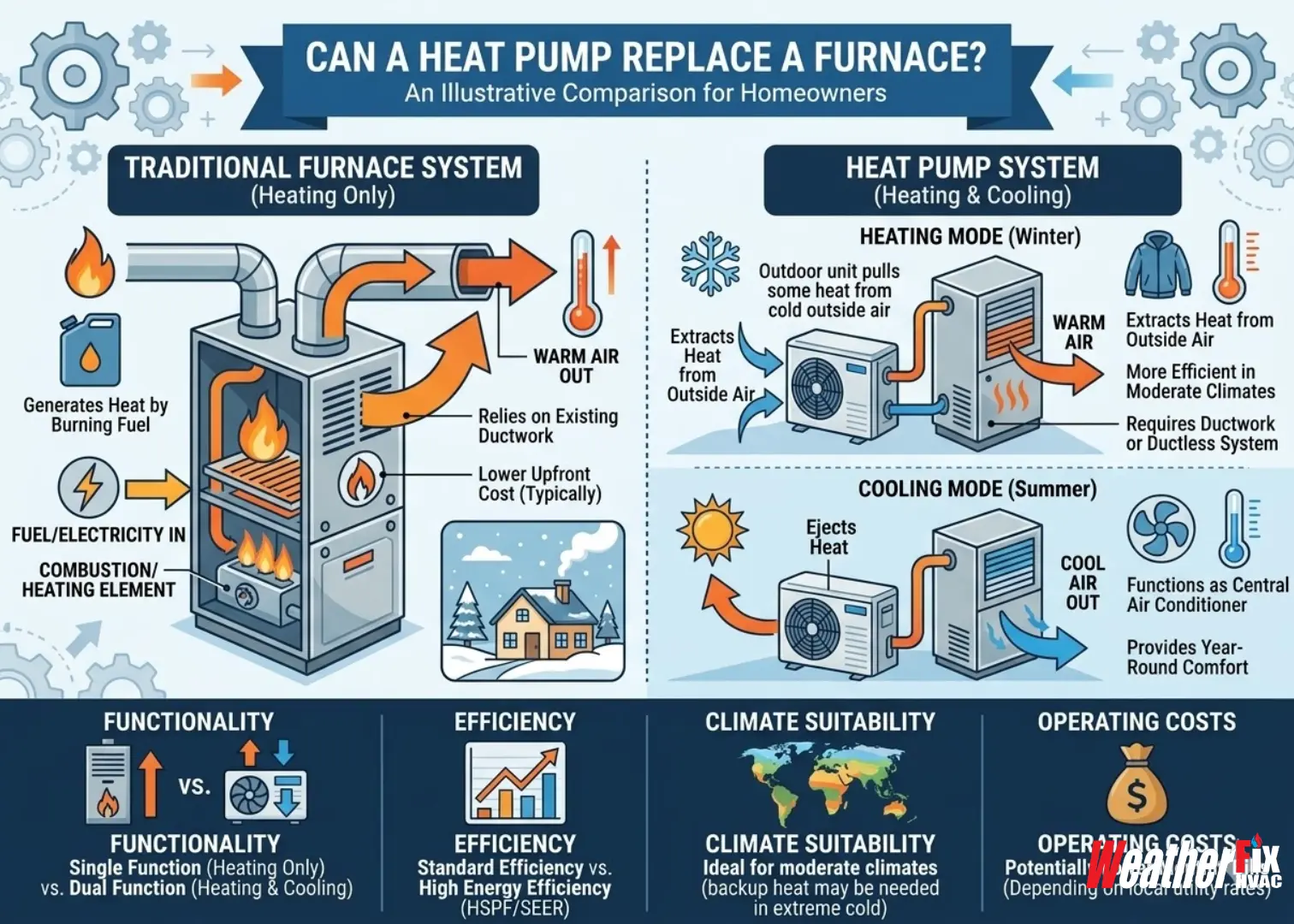
Knowing how these systems work helps you make an informed choice. Many clients ask us, can a heat pump replace a furnace reliably? They use entirely different methods to warm your house. One burns fuel, while the other moves existing heat. Let us compare the two technologies directly.
How Traditional Furnaces Operate
A standard gas furnace generates heat through combustion. It burns natural gas to create a hot flame. This flame heats a metal heat exchanger inside the unit. A blower fan then pushes air over this hot metal. The warmed air travels through your ductwork to heat your rooms. This process is very fast and produces extremely hot air. It is a reliable method for Ottawa winters.
How Modern Heat Pumps Work
Heat pumps do not burn any fuel to create heat. Instead, they absorb existing heat energy from the outside air. Even on very cold days, thermal energy is present outdoors. The system absorbs this energy using a special refrigerant. It compresses the refrigerant to increase its temperature significantly. This gathered heat is then pumped inside your home. It is a highly efficient transfer process.
The Efficiency Difference Explained
Efficiency ratings dictate your monthly energy costs. A top-tier gas furnace might reach ninety-eight percent efficiency. This means two percent of the fuel is wasted. A heat pump can reach three hundred percent efficiency. It moves three units of heat for every one unit of electricity used. This massive efficiency gap makes electric heating very attractive. You get much more heat for your money.
The Ottawa Climate Challenge
Ottawa winters are notoriously harsh and unpredictable. Temperatures can easily plummet to minus thirty degrees Celsius. Many homeowners doubt electric heating can survive these extremes. It is a valid concern for anyone living in the National Capital Region. Let us look at how modern systems handle the deep freeze.
Handling Deep Freeze Temperatures
Old electric heat pumps failed miserably in Canadian winters. They stopped working efficiently below freezing. Today, cold climate technology has revolutionized the industry. These new units feature advanced inverter compressors. They can extract heat from the air down to minus twenty-five degrees. They provide reliable warmth even during severe January snowstorms. You no longer have to fear freezing in your own home.
The Importance Of Backup Heating
Even the best systems have a thermal balance point. This is the temperature where they struggle to keep up. In Ottawa, you absolutely need a backup heating source. This is usually an electric resistance coil built into the unit. It acts like a large toaster to provide emergency warmth. When the heat pump struggles, the backup electric strips activate automatically. This ensures you never lose heat.
Why Hybrid Systems Are Popular
Many Ottawa residents choose a hybrid heating approach. They keep a gas furnace as their reliable backup system. The electric unit handles eighty percent of the winter heating. The gas furnace only activates during the most extreme cold snaps. This dual fuel setup offers the ultimate peace of mind. It balances energy savings with guaranteed heating power. It is a very smart compromise.
Financial Considerations For Homeowners
Replacing your entire heating system is a major financial investment. You must look beyond the initial purchase price. Operating costs and government incentives play a massive role. Understanding the complete financial picture is crucial before making a final decision.
Comparing Upfront Installation Costs
An electric heat pump is generally more expensive upfront. It costs more than a standard gas furnace replacement. You are essentially buying an air conditioner and heater together. You might also need expensive electrical panel upgrades. It is important to ask how much does a heat pump cost locally. Always get multiple detailed quotes from certified professionals.
Long Term Energy Bill Savings
The higher upfront cost is offset by monthly savings. Electric heating is incredibly efficient during moderate winter weather. You will use significantly less natural gas over the year. This protects you from rising carbon taxes and volatile fuel prices. To understand the savings, research how much power does a heat pump use. The payback period is often surprisingly short.
Government Rebates And Incentives
The Canadian government wants homeowners to electrify their heating. They offer massive financial incentives to encourage this switch. You can often receive thousands of dollars in local rebates. These rebates drastically lower your total installation costs. Always check current program eligibility before signing any contracts. An experienced contractor will guide you through the complex rebate application process.
Environmental Benefits Of Switching
Financial savings are not the only reason to upgrade. Your home heating choices heavily impact the local environment. Switching to electric heating is a powerful green initiative. It is a tangible way to protect our planet for future generations. Let us explore the massive environmental benefits.
Reducing Your Carbon Footprint
Traditional furnaces burn fossil fuels constantly all winter long. This releases a massive amount of carbon dioxide directly into the atmosphere. Electric units produce absolutely zero on-site greenhouse gas emissions. Ontario has a relatively clean electrical power grid. This means your home heating becomes incredibly environmentally friendly. It is the single biggest step to reduce your personal carbon footprint.
Moving Away From Fossil Fuels
The global push is to eliminate residential fossil fuel dependence. Relying on natural gas ties you to an unpredictable global market. Electric heating systems future-proof your valuable real estate investment. As renewable energy sources expand, your home becomes even greener. You are taking a proactive step toward a sustainable future. It is a responsible choice for modern homeowners.
Space And Maintenance Factors
New equipment changes how you interact with your mechanical room. It alters your required maintenance routines entirely. You must understand these daily and yearly changes. Proper care guarantees your new system will last for decades.
Reclaiming Your Basement Space
Gas furnaces require specific venting and wide safety clearances. Removing a gas appliance often frees up basement space. There is no longer a need for a dangerous combustion zone. This can make your mechanical room feel much larger. You eliminate the risk of deadly carbon monoxide leaks entirely. This provides massive peace of mind for your family.
Year Round Maintenance Needs
A traditional furnace only runs for six months a year. A heat pump works hard every single day. It cools in the summer and heats throughout the winter. Because of this, it accumulates dust and dirt much faster. You must change your indoor air filters very frequently. Ignoring filter changes will cause severe mechanical damage quickly.
Cleaning The Outdoor Unit
The outdoor condenser unit requires constant visual inspection. Ottawa winters dump heavy snow and ice on the equipment. You must keep the unit completely clear of snowdrifts. In summer, you must remove cottonwood fluff and dead leaves. Knowing how do you clean a heat pump is an essential homeowner skill. Annual professional servicing is also absolutely mandatory.
Comparing Noise And Comfort Levels
Comfort is about more than just raw temperature. The way the air feels inside your home matters greatly. Traditional systems and electric units deliver air very differently. You will notice a distinct change in your daily comfort.
The Blast Of A Traditional Heater
A gas furnace creates a very hot flame. It blasts highly heated air through your vents rapidly. You feel an immediate rush of hot air when it turns on. This can sometimes create uncomfortable hot and cold spots. The sudden noise of the powerful blower can also be startling. It is a very aggressive way to heat a home.
The Steady Warmth Of Electric Systems
Electric heating provides a much gentler experience. It produces air that is warm but not scorching hot. The system runs for longer periods at lower fan speeds. This creates a very even and consistent indoor temperature. You will not experience drastic temperature swings anymore. The subtle airflow is extremely comfortable during the winter.
Indoor And Outdoor Noise Differences
Modern electric units are incredibly quiet. Inverter technology prevents the loud clunking of traditional compressors. The outdoor unit hums quietly like a large refrigerator. Inside your home, the variable speed fan is barely noticeable. You will sleep much better without a roaring furnace waking you. It drastically improves the peacefulness of your home.
Understanding The Installation Warranty
Your new equipment comes with important manufacturer guarantees. You must understand how these warranties protect your investment. A simple mistake can void your coverage completely. Let us review what you need to know.
Standard Equipment Parts Warranties
Most major manufacturers offer a ten year parts warranty. This covers expensive components like the compressor and coils. If a factory part fails prematurely, you receive a free replacement. However, this only covers the physical part itself. You must still pay the technician for their labor time. Always register your new equipment online immediately after installation.
Contractor Labor Guarantees
Labor is the most expensive part of any repair. A good contractor provides their own separate labor warranty. This usually lasts for one or two years after installation. During this time, they will fix installation errors for free. Always ask for this labor guarantee in writing before signing. It proves they stand proudly behind their workmanship.
The Importance Of Annual Tune Ups
Warranties come with strict maintenance requirements. You cannot simply install the unit and forget about it. Manufacturers demand proof of annual professional servicing. If you skip your yearly tune up, your warranty is voided. This leaves you vulnerable to massive future repair bills. Book your yearly maintenance appointments in advance to stay protected.
Steps To Make The Upgrade
You cannot simply order a new unit online. This is a complex mechanical and electrical home renovation. It requires precise mathematical calculations and skilled labor. Following the correct steps ensures a flawless installation process.
Getting A Proper Home Assessment
Never accept a fast quote over the phone. A contractor must perform a strict Manual J load calculation. This determines the exact heating requirements of your unique house. They will measure your windows, doors, and attic insulation levels. Proper sizing is the most critical step of the entire process. An oversized unit will fail prematurely and waste electricity.
Choosing The Right HVAC Contractor
The quality of the installation matters more than the brand. You need a highly skilled and licensed local professional. Ensure they have specific experience with cold climate electric systems. Ask for local references and read their online reviews carefully. Read our guide on how to choose the right HVAC contractor for more help. A good contractor guarantees their work.
Planning The Installation Day
The installation process usually takes one or two full days. Technicians will remove your old furnace and modify your ductwork. They will run new copper refrigerant lines to the outside. An electrician will likely upgrade your wiring and breaker panel. Prepare for some noise and brief power interruptions. The crew will test the system fully before leaving.
Making Your Final Decision
Deciding to eliminate your furnace is a major choice. You must weigh the upfront costs against the long term benefits. Ask yourself, can a heat pump replace a furnace for my family? If your current equipment is old and failing, the answer is likely yes. Consult with local Ottawa experts to design the perfect comfort system. Enjoy a greener and more efficient home.
Frequently Asked Questions (FAQ)
Do I need a backup heater in Ottawa?
Yes, a backup heat source is highly recommended in Ottawa. Most units come with internal electric resistance heating strips. These activate automatically when temperatures drop severely. Many people also keep their existing gas furnace as a hybrid backup. This ensures complete safety.
Are there any grants available for this upgrade?
The government frequently updates green energy rebates. Currently, there are massive provincial and federal incentives available. These can cover thousands of dollars of the installation cost. Your HVAC contractor will help you apply for these rebates directly. Always verify current funding limits.
How long does the new equipment last?
A well-maintained system will last around fifteen years. Because it runs year round, it experiences more wear and tear. You must perform regular filter changes and book annual tune-ups. Proper maintenance is the key to longevity. Neglected systems will fail much sooner.