

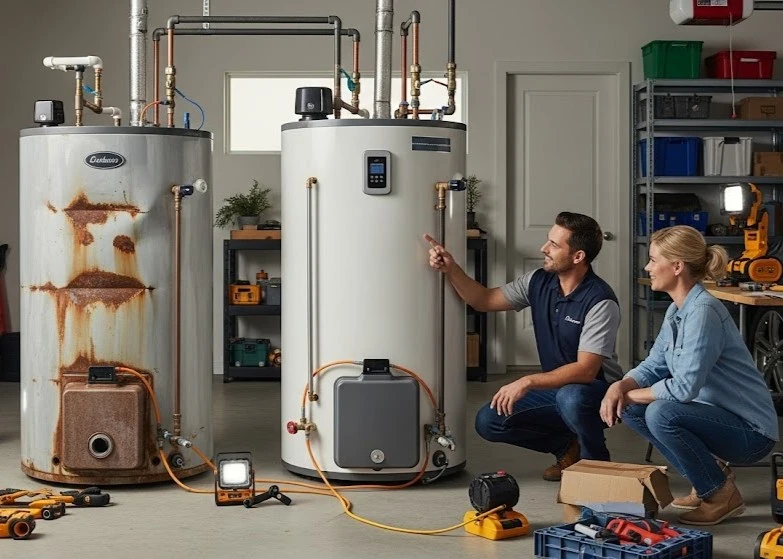
Your hot water tank is one of the hardest working appliances in your home. It provides comfort for your morning showers, helps clean your dishes, and washes your laundry. Most of the time, it works silently in a closet or basement, completely out of mind. However, like any appliance, it won’t last forever. The key is knowing when to replace hot water tank before it fails catastrophically, saving you from a cold shower or, worse, a flooded basement.
Waiting for a complete breakdown is a recipe for stress and expensive emergency repairs. This guide will walk you through the seven key signs that your water heater is nearing the end of its life and needs a planned, proactive replacement.
1. Your Hot Water Tank’s Age is a Major Factor
The single most reliable indicator of your water heater’s health is its age. Even if it seems to be working fine, an old tank is operating on borrowed time. The internal components wear down, efficiency drops, and the risk of a major leak increases every year it stays in service.
How to Find the Age of Your Water Heater
Look for the manufacturer’s sticker on the side of the tank. You will see a serial number, which usually contains the manufacturing date encoded within it. The format varies by brand, but it’s often straightforward. For example, a serial number starting with “K15…” might mean it was made in the 11th month (K is the 11th letter) of 2015. A quick search online for your specific brand and “how to read serial number” will give you a precise answer.
Why Age Matters Beyond Just Functioning
A standard tank-style water heater has an average lifespan of 8 to 12 years. If yours is in this range or older, it’s time to start planning for a replacement. While a tankless water heater can last over 20 years, conventional tanks are under constant pressure and face internal corrosion. An older tank is not only less energy-efficient, costing you more on your utility bills, but the metal is also weaker and more prone to sudden failure. Proactively replacing an old unit is always smarter than dealing with the aftermath of a burst tank.
2. Rusty Water or a Rusty Tank
Rust is a major red flag that should never be ignored. It’s a clear signal that the inside of your tank is corroding. Once rust appears, it’s not a matter of if the tank will leak, but when.
Discolored Hot Water
If you turn on your hot tap and the water comes out with a brown or reddish tint, your water heater is likely rusting from the inside out. This happens when the anode rod, a component designed to attract corrosive elements, has been completely used up. Once it’s gone, the water begins to eat away at the steel tank itself. To confirm the tank is the problem, try filling a bucket with water from a cold tap. If that water is clear, the issue is almost certainly with your water heater.
Visible Rust on the Outside
Take a close look at the tank itself. Do you see rust forming around the water inlet or outlet connections on top? Is there rust on the temperature and pressure relief valve? Even worse, do you see rusty spots on the side of the tank? Any external rust indicates that the steel is compromised. This is a critical warning sign that the tank’s structural integrity is failing, and a leak is imminent.
3. Strange Noises Coming from the Tank
Your hot water tank should operate almost silently. If you start hearing loud or unusual noises like popping, banging, or a low rumbling sound, it’s a cry for help. These sounds are typically caused by sediment buildup inside the tank.
What Causes the Noises?
Over the years, minerals from your water supply (like calcium and magnesium) settle at the bottom of the tank, forming a thick layer of sediment. This layer hardens over time. When the lower heating element turns on, it has to heat the water through this layer of mineral sludge. Water gets trapped under the hardened sediment, boils, and makes a popping or banging sound as it escapes.
Why It’s a Problem
This sediment buildup creates two major issues. First, it forces your water heater to work much harder, drastically reducing its energy efficiency and driving up your bills. Second, the constant heating and stress on the hardened sediment can cause the bottom of the tank to become brittle and eventually crack, leading to a leak.
The Big Question: When to Replace Hot Water Tank
You have seen the warning signs—old age, rusty water, and strange noises. So, how do you make the final call? Deciding when to replace hot water tank often comes down to a simple comparison between the cost of a repair and the risk of future failure.
The Tipping Point: Repair vs. Replace
A good rule of thumb is the 50% rule. If your water heater is out of warranty and the cost of a repair is more than 50% of the cost of a brand-new unit, replacement is the more financially sound option. For example, if your 11-year-old tank needs a new heating element and a professional flush that costs several hundred dollars, that money is better invested in a new, efficient, and reliable heater with a full warranty.
Don’t Wait for a Complete Failure
The most important takeaway is to be proactive. A planned replacement allows you to research your options, choose the best model for your needs, and schedule the installation at your convenience. An emergency replacement after a leak forces you to take whatever model is available, often at a higher price, all while you clean up a watery mess.
4. Water Leaking Around the Unit
This is the most urgent sign of all. If you see water pooling around the base of your hot water tank, you need to act immediately. A leak is a clear indication that the inner tank has failed.
Differentiating Types of Leaks
First, check where the water is coming from. If it is dripping from the connections on top of the tank or from the pressure relief valve, it might be a repairable issue. A plumber may be able to simply tighten a fitting or replace a faulty valve. However, if the water is seeping from the bottom of the tank itself, it means there is a crack in the internal shell, and the unit cannot be saved.
The “Small” Leak Misconception
Never assume a small puddle is a minor problem. The water inside your tank is under significant pressure. A tiny fracture can expand rapidly and turn a small leak into a major flood in a matter of hours, causing thousands of dollars in water damage to your floors, walls, and belongings. If you see a leak, shut off the water supply to the tank and call a professional immediately.
5. Inconsistent Water Temperature and Recovery
Are you finding that your showers are turning lukewarm much faster than they used to? Or does the water from the tap never seem to get as hot as it once did? This is a sign that your water heater is struggling to do its job.
Possible Causes
This issue can sometimes be caused by a broken thermostat or a failing heating element, which are parts that can be replaced. However, it can also be a direct result of the heavy sediment buildup we discussed earlier. The sediment creates a barrier between the heating element and the water, preventing the water from heating up effectively and efficiently.
When It Signals Replacement
If your tank is older than ten years and is struggling to produce enough hot water, it’s a strong indicator that the entire unit is nearing the end of its life. While you could replace a part, the underlying problem of age and inefficiency remains. Investing in a new tank will solve the problem for good and provide you with reliable, efficient hot water.
6. Considering the Switch: Upgrading Your System
Sometimes, the reason to replace your hot water tank isn’t that it’s failing, but that your needs have changed or better technology has become available. This is a great time to evaluate your options for a more modern and efficient system.
The Benefits of a Modern Tankless Water Heater
Tankless water heaters are a popular upgrade. Instead of constantly heating a large tank of water, they heat water instantly on demand. This means you never run out of hot water, and you save significant money on energy bills because the unit isn’t running when you aren’t using it. They also have a much longer lifespan and take up less space.
High-Efficiency Conventional Tanks
If you prefer to stick with a traditional tank, modern units are far more efficient than those made a decade ago. New models have much better insulation, which dramatically reduces standby heat loss—the process of the water cooling down in the tank while it waits to be used. This upgrade alone can lead to noticeable savings.
Choosing the Right Size for Your Family
Has your family grown since you first installed your water heater? If you are constantly running out of hot water, your tank may simply be too small for your household’s demands. Replacing an undersized unit with one that has a larger capacity can greatly improve your daily comfort and convenience.
Take Action Before It’s Too Late
Your hot water tank is essential to your daily life. By paying attention to its age, performance, and appearance, you can accurately determine when to replace hot water tank and make a smart decision. Look for the key signs: an age over 10 years, rusty water, leaks, strange noises, and inadequate heating. Being proactive will protect your home from water damage, lower your energy bills, and ensure you always have the hot water you need. If you notice any of these warning signs, don’t wait. Contact a licensed plumbing professional to inspect your system and recommend the best course of action.