

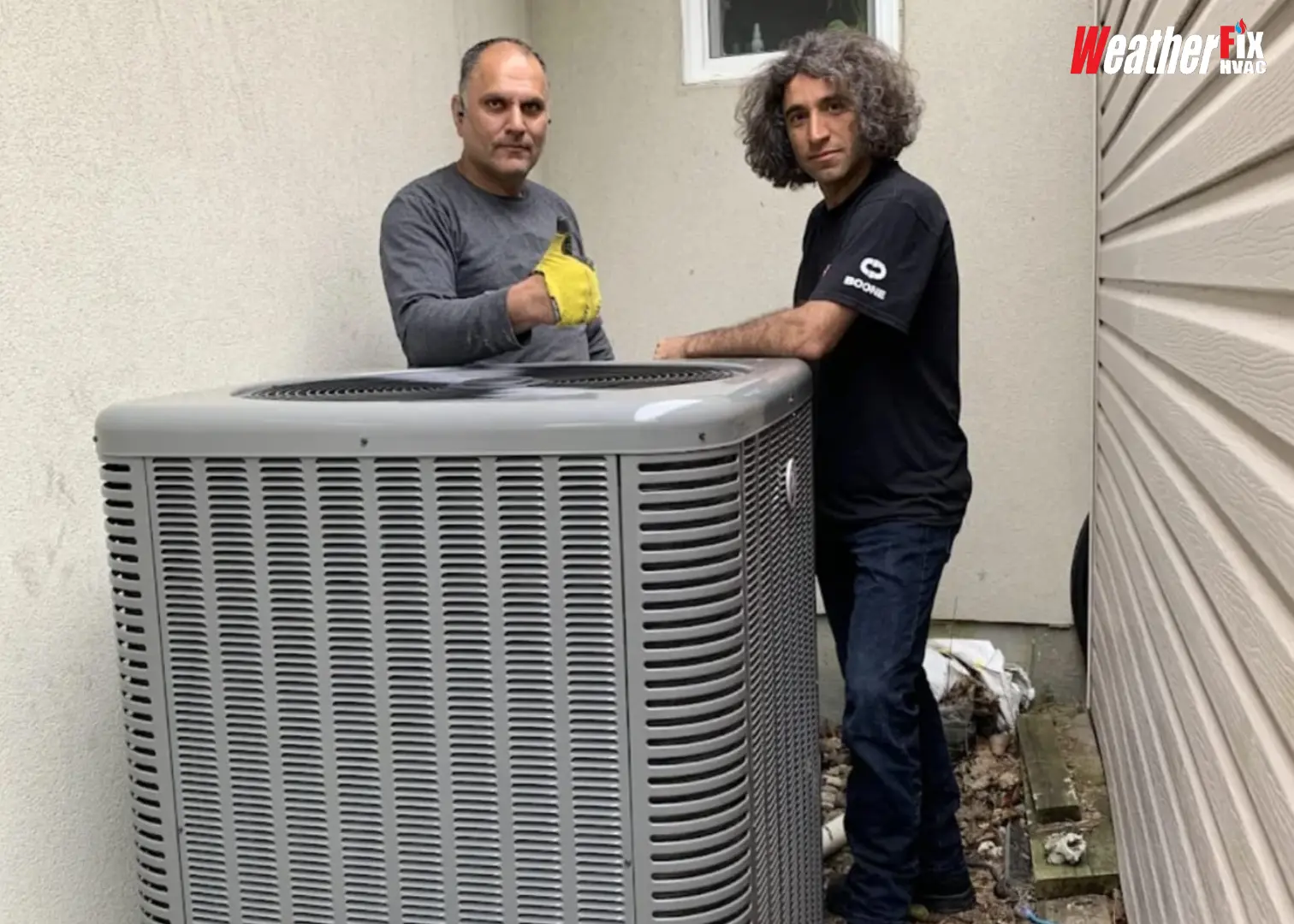
When you think of “air conditioning,” you likely picture the large metal box sitting in your backyard or side yard. That box is the AC condenser unit, and it is the workheart of your cooling system. In Ottawa, where summer temperatures can spike to humid highs of +35°C, this unit works overtime to release heat from your home into the outdoors.
If your outdoor unit is making strange noises, failing to cool, or is simply old and inefficient, you might be looking into AC condenser unit installation. Whether you are replacing a failed unit or installing a brand-new system, understanding the installation process is critical. This guide covers everything Ottawa homeowners need to know about installing this vital component, from site preparation to the final safety checks.
What Is an AC Condenser Unit?
To understand the installation, you first need to understand the equipment. Your central air conditioning system is a “split system.” It has two main parts:
- The Evaporator Coil: Located inside your home, attached to your furnace. It absorbs heat from your indoor air.
- The Condenser Unit: Located outside your home. It contains the compressor, condenser coil, and fan. Its job is to release the absorbed heat into the outdoor air.
When you request an AC installation in Ottawa, the technician spends the majority of their time working on this outdoor condenser unit.
Can I Perform an AC Condenser Unit Installation Myself?
In Ontario, the answer is a strict no. While you might be handy with tools, installing an AC condenser unit involves handling high-voltage electricity and pressurized refrigerants.
- Refrigerant Regulations: Under Ontario regulations, only a certified technician with a valid Ozone Depletion Prevention (ODP) card can legally buy or handle refrigerants (like R-410A). Venting refrigerant into the atmosphere is illegal and carries heavy fines.
- TSSA and ESA Safety: The unit requires a high-voltage electrical connection (240V). Improper wiring is a fire hazard. Additionally, any work involving gas lines (if near your furnace) or integration with your heating system requires TSSA-certified professionals.
- Warranty Void: Almost every manufacturer (Carrier, Lennox, Trane, etc.) will instantly void your warranty if the unit is not installed by a licensed HVAC professional.
For safety and compliance, always hire a pro. You can learn more about finding a qualified expert in our guide on how to choose the right HVAC contractor.
The Weatherfix Installation Process: Step-by-Step
When you hire a professional team for an AC condenser unit installation, here is the rigorous process we follow to ensure your system runs efficiently for years.
1. Site Selection and Preparation
Ottawa’s climate is unique. The freeze-thaw cycles of our winters can cause the ground to heave and shift.
- The Pad: We never place a condenser directly on the grass. We install a composite or concrete pad that provides a stable, level base. This prevents the unit from tipping over time, which can damage the compressor.
- Clearance: The unit needs “breathing room.” We ensure there is at least 18-24 inches of clearance around the unit from fences, shrubs, or walls to allow for proper airflow.
- Shade: Whenever possible, we position the unit in a shaded area (like the north side of the house). A cooler unit runs more efficiently than one baking in the direct afternoon sun.
2. Matching the Indoor and Outdoor Coils
This is the most critical technical step. You generally cannot just replace the outdoor box and leave an old, mismatched indoor coil.
- The SEER Rating: If your new condenser is high-efficiency (e.g., 16 SEER2) but your indoor coil is an old 10 SEER model, the system will not work properly. It will be inefficient and likely fail prematurely.
- Refrigerant Compatibility: Older units used R-22 (Freon), while new units use R-410A or R-454B. These are not compatible.
- Recommendation: For a successful AC condenser unit installation, we almost always recommend replacing the indoor evaporator coil at the same time to ensure a perfectly matched system.
3. Placing and Connecting the Unit
Once the pad is ready, the new unit is set in place.
- Refrigerant Lines: Two copper lines (the suction line and the liquid line) connect the outdoor unit to the indoor coil. These must be brazed (welded) perfectly to prevent leaks.
- Electrical: A new electrical disconnect box is usually installed on the exterior wall near the unit for safety.
- Thermostat Wiring: Low-voltage wires are connected to the furnace and thermostat to control the cooling cycle.
4. The Vacuum and Charge
Before the unit is turned on, the technician performs a “vacuum down.”
- Removing Moisture: A vacuum pump removes all air and moisture from the copper lines. Even a drop of water inside the lines can freeze and destroy the compressor.
- Releasing the Charge: Once the lines are verified as sealed and dry, the refrigerant is released into the system. The technician then fine-tunes the charge based on the exact length of the copper lines and the outdoor temperature.
Repair vs. Install: When Should You Replace the Condenser?
If your current unit is acting up, you face a common dilemma: repair or replace?
- When to Repair: If the unit is under 10 years old and the repair cost is minor (like a capacitor or fan motor), a repair is usually the best choice. Our team offers fast air conditioner repair in Ottawa to get you back up and running.
- When to Install New:
- Age: If the unit is over 12-15 years old.
- Major Failure: If the compressor has died (the “heart” of the system), the cost to fix it often approaches the cost of a new unit.
- Leaking Coil: If the condenser coil has rotted and is leaking refrigerant, a replacement is often more improved and cost-effective than a patch job.
Protecting Your New Installation
Once your new condenser is installed, regular care is essential to protect your investment.
- Keep it Clean: In Ottawa, cottonwood fluff, leaves, and grass clippings can clog the outdoor fins. Gently rinse the unit with a garden hose once a month during the summer.
- Winter Care: Do not wrap your AC in a plastic tarp for the winter. This traps moisture and causes rust. A simple piece of plywood on top to protect the fan from falling ice is sufficient.
- Annual Tune-Ups: Schedule professional AC maintenance in Ottawa every spring. This keeps your warranty valid and ensures the refrigerant levels remain perfect.
Conclusion: A Cool and Comfortable Home
A professional AC condenser unit installation is the foundation of a comfortable Ottawa summer. By ensuring the unit is properly sized, matched to your indoor coil, and installed on a stable base, you can enjoy efficient cooling for 15 years or more. Don’t let the heat get the best of you—ensure your system is installed right the first time.
If you are unsure if you need a repair or a full replacement, our team is here to help. From expert heating services in Ottawa to complete cooling solutions, Weatherfix is your trusted local partner.
Frequently Asked Questions (FAQ)
1. How long does an AC condenser unit installation take?
A typical installation takes between 4 to 8 hours. This includes removing the old unit (and properly disposing of the old refrigerant), preparing the site, installing the new unit, brazing the lines, and performing the vacuum and safety checks.
2. Can I replace just the outdoor unit and keep my old indoor coil?
Technically yes, but it is rarely recommended. If the indoor coil is old, it likely uses an incompatible refrigerant or has a lower efficiency rating. Mismatching the two parts will result in poor performance, higher energy bills, and a voided warranty. It is best to replace both as a matched set.
3. How much clearance does my AC condenser need?
For optimal performance, your condenser unit needs at least 12 inches of clearance from the house wall and 24 inches of clearance from fences, shrubs, or other obstructions. The top of the unit must be completely open to allow hot air to escape—never install a deck or roof directly over the condenser.
4. Do I need a permit for AC installation in Ottawa?
Generally, a building permit is not required for a simple AC replacement. However, if new electrical circuits need to be run, an electrical permit (from the ESA) is required. A reputable contractor will handle all necessary code compliance and safety checks for you.