

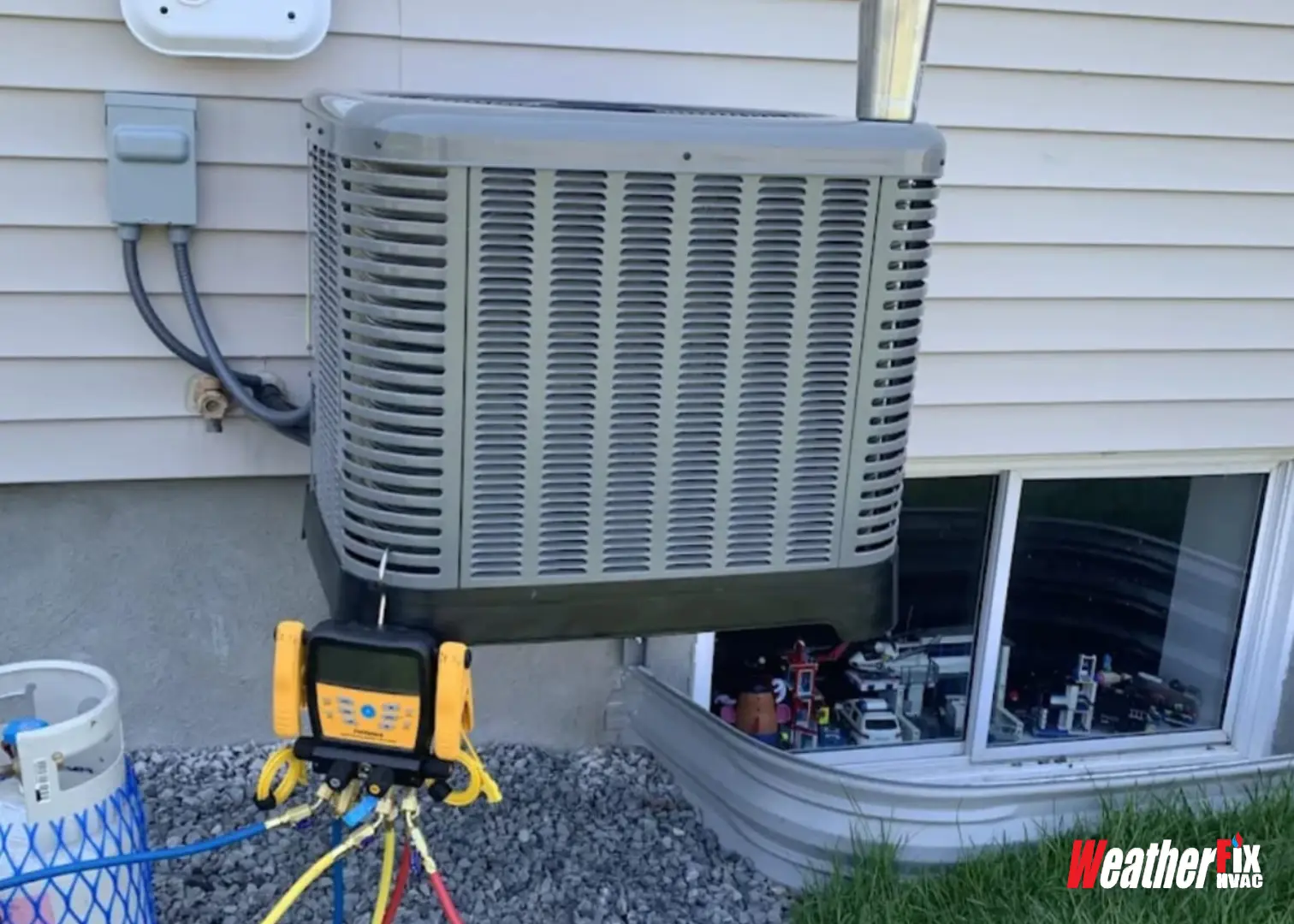
If you walk around any neighbourhood in Ottawa, from Kanata to Orléans, you will see metal boxes sitting beside homes, humming away. For decades, it was safe to assume these were just air conditioners. But today, with the push for greener energy and efficient heating, that metal box might be something else entirely. It might be a heat pump.
This confusion is common because, to the untrained eye, a central heat pump looks almost identical to a central air conditioner. They are often the same shape, size, and colour. Yet, one shuts down in September, while the other keeps working through the depths of February.
If you are buying a new home, inspecting your current system, or just curious about this technology, knowing what does a heat pump look like is the first step in understanding how it heats and cools your home. This guide will walk you through the visual cues, the different styles available, and the specific features you’ll see on units installed in the Ottawa climate.
The Chameleon of HVAC: Why Heat Pumps Look Like AC Units
The reason a heat pump looks like an air conditioner is simple: it is an air conditioner. Or rather, it is an air conditioner that can run in reverse. Both systems use the same fundamental components—a compressor, a condenser coil, a fan, and refrigerant—to move heat around.
Because they share 90% of the same DNA, manufacturers often use the exact same metal casing (cabinet) for both their AC units and their heat pumps. If you placed a Carrier AC and a Carrier heat pump side-by-side, you likely couldn’t tell them apart just by glancing at the casing. Both are typically large, grey or beige metal cubes with a grille on the top and louvres on the sides.
However, there are subtle visual differences if you know where to look. The most significant difference is hidden inside the unit: a component called a “reversing valve.” While you can’t always see this from the outside, it is the mechanical heart that allows the system to switch from “cool” to “heat.”
What Does a Heat Pump Look Like? The Three Main Styles
While the “metal cube” is the most common image that comes to mind, heat pumps actually come in three distinct form factors. What you see depends entirely on the type of system installed.
1. The Standard Vertical “Cube” (Central Split System)
This is the most common type found in Ottawa homes with existing ductwork.
- The Shape: It looks like a large metal box or cylinder, roughly 3 to 4 feet tall.
- The Fan: It has a large fan blade visible through a wire grille on the very top of the unit. This is a “top-discharge” unit, meaning it blows air upwards.
- The Location: It is almost always seated on a concrete or composite pad next to the foundation of the house.
- The Sound: When running, it emits a steady hum similar to a fridge but louder.
2. The Side-Discharge “Slimline” Unit
This style is gaining massive popularity in Ottawa, especially for homes with limited space between houses.
- The Shape: It looks much thinner, resembling a large suitcase standing up. It is tall and narrow rather than wide and boxy.
- The Fan: You won’t see a fan on top. Instead, there is a circular grille on the front of the unit where the air is blown out horizontally.
- The Advantage: Because they are ultra-quiet and have a smaller footprint, they are perfect for tight Ottawa side yards where a standard cube might block a walkway.
3. The Ductless “Mini-Split”
If a home doesn’t have ductwork (like many older homes in the Glebe or additions), you will see a ductless system.
- The Outdoor Unit: It looks like a smaller version of the side-discharge unit mentioned above—a rectangular, suitcase-shaped box with a fan on the front.
- The Indoor Unit: This is the most recognizable part. It is a long, rectangular white or silver bar mounted high on an interior wall. These “heads” are the tell-tale sign of a ductless heat pump system.
The “Ottawa Look”: Why Your Heat Pump Needs a Snow Stand
There is one specific visual feature that instantly differentiates a heat pump from an AC in Ottawa: the “snow stand.”
An air conditioner is only used in summer. It can sit directly on a concrete pad on the ground, and if it gets buried in 4 feet of snow in January, it doesn’t matter because it’s turned off. A heat pump, however, must breathe in the winter to generate heat. If its airflow is blocked by snow, the system will fail or freeze up.
Therefore, in our climate, a professionally installed heat pump will almost always be elevated.
- The Look: You will see the metal unit sitting on top of sturdy metal legs or a bracket, raising it 12 to 18 inches off the ground.
- The Purpose: This elevation keeps the unit above the average snow accumulation and allows meltwater (from the defrost cycle) to drain away freely without turning into a glacier at the bottom of the unit.
If you see an outdoor unit sitting directly on the ground in Ottawa, it is most likely just an AC. If you see it sitting on stilts or a wall bracket, it is almost certainly a heat pump.
What Does the Indoor Unit Look Like?
The outdoor unit is only half the story. The other half lives inside your home, and its appearance depends on whether your system is “ducted” or “ductless.”
The Ducted Look (Hidden in the Basement)
If you have a central heat pump, the indoor part looks exactly like a gas furnace. In fact, it is usually bolted directly onto your existing furnace.
- The Coil: Inside the metal ductwork just above your furnace is an “evaporator coil.” You can’t usually see the coil itself, but you will see a copper line set running into a metal box above the furnace.
- The Hybrid Setup: In a hybrid system, your gas furnace is the backup. So, when you look in your mechanical room, you will just see your standard furnace. The heat pump is invisible from the inside, doing its work silently through the existing vents.
The Ductless Look (On the Wall)
As mentioned earlier, ductless units are highly visible. They are typically:
- Wall-Mounted: White, sleek plastic units mounted near the ceiling.
- Floor-Mounted: Lower profile units that look somewhat like a modern radiator, sitting low on the wall.
- Ceiling Cassettes: These are recessed into the ceiling, so all you see is a flat grille.
Get Free Heat Pump Quote Now!
How to Identify Your Unit in 3 Easy Steps
If you have bought a new home and are staring at the metal box outside, unsure if it’s an AC or a heat pump, here is how you can tell for sure.
1. Check the Manufacturer Label
Every outdoor unit has a data plate sticker on the side (usually near where the copper pipes enter the unit).
- Look for the Model Number.
- Type that model number into Google. The search results will immediately tell you if it is an “Air Conditioner” or a “Heat Pump.”
- Sometimes, the label itself will explicitly say “Heat Pump” or “HP” in the description.
2. The “Winter Spin” Test
This is the easiest physical test.
- Turn your thermostat to “Heat” on a cold day.
- Go outside and look at the unit.
- If the fan on the outdoor unit is spinning and blowing air while your house is heating, it is a heat pump.
- If your house is heating but the outdoor unit is silent and still (and perhaps covered in a winter cover), it is likely just an AC paired with a furnace.
3. Look Through the Grille (The Reversing Valve)
Grab a flashlight and peer down through the fan grille on top of the outdoor unit.
- In a standard AC, you will mostly just see the compressor (a black cylinder).
- In a heat pump, you will see the compressor, but you will also see a brass valve with three copper pipes coming out of it horizontally. This is the reversing valve. It often looks like a small brass instrument or a plumbing junction. If you see this, you have a heat pump.
Why the “Look” Matters for Maintenance
Knowing what your unit looks like helps you maintain it. Since heat pumps run year-round, they get dirty twice as fast as air conditioners.
Because they pull air in from the sides, the “fins” (the metal grilles that look like a car radiator) can easily get clogged with grass clippings, cottonwood fluff, and leaves. Unlike an AC, which you might cover for the winter, you must never put a tight cover on a heat pump in the winter. It needs to breathe.
Recognizing the look of a dirty coil can save you money. If the metal fins look like they are wearing a grey sweater of dust, it’s time to schedule professional AC maintenance in Ottawa or a heat pump tune-up. Keeping these coils clean is essential for efficiency—which is vital when you consider how much power a heat pump uses.
Conclusion: Knowing Your Home’s Systems
While a heat pump may look like a simple metal box, it is a sophisticated piece of technology that offers efficient heating and cooling for the Ottawa climate. Whether it’s the tall, slim side-discharge unit or the standard cube sitting on a snow stand, identifying your system allows you to care for it properly.
If you are still unsure what you have, or if you are considering upgrading that old AC to a modern heat pump, we can help. Our team can assess your current setup, explain how a furnace works with an air conditioner, and guide you toward the perfect solution for your home.
Whether you need a new ac installation in Ottawa or expert heating services in Ottawa, Weatherfix is your local expert for all things HVAC.
Frequently Asked Questions (FAQ)
1. Can I tell if I have a heat pump just by looking at my thermostat?
Often, yes. Check your thermostat’s “System” or “Mode” settings. If you see an option for “Emergency Heat,” “Em Heat,” or “Aux Heat,” you almost certainly have a heat pump. Standard air conditioner thermostats usually only have “Heat,” “Cool,” and “Off.”
2. Does a heat pump look different in the winter than in the summer?
The unit itself looks the same, but in the winter, you might notice it “steaming.” This is normal! When a heat pump goes into “defrost mode” to melt ice off its coils, it can release a puff of steam and water will drip from the bottom. This is a key visual difference—an AC unit should never run or produce steam in the winter.
3. Why is my neighbor’s heat pump skinny and mine is a big box?
Your neighbor likely has a “side-discharge” unit. These are newer, inverter-driven models that have a smaller footprint and blow air horizontally. Your “box” style is a traditional vertical discharge unit. Both work well, but they have different form factors and space requirements.
4. Do I need to build a roof over my heat pump?
Generally, no. Heat pumps are designed to live outdoors in the rain and snow. However, in Ottawa, you must ensure that heavy snow or ice falling from your roof line doesn’t smash the fan. If your unit is directly under the drip line of a metal roof, a simple, open-sided shelter (that does not restrict airflow) might be recommended by your installer.